

Hepatitis B and C: Symptoms and Treatment
If a recent blood report says “HBsAg positive” or “anti-HCV reactive”, it is normal to feel worried. Hepatitis B and C are among the most common liver infections in India, yet most people carrying them feel perfectly fine for years. That silence is exactly why they are called silent infections. Hepatitis B and C are liver infections caused by two different viruses. Many people carry them for years without feeling unwell, and by the time symptoms appear, the liver may already be scarred.
The good news is that both can be detected with a simple blood test, hepatitis C is curable, and hepatitis B can be controlled with daily medicine. This guide explains hepatitis B and C symptoms, how doctors diagnose them, and how treatment works in India.
What Is the Difference Between Hepatitis B and C?
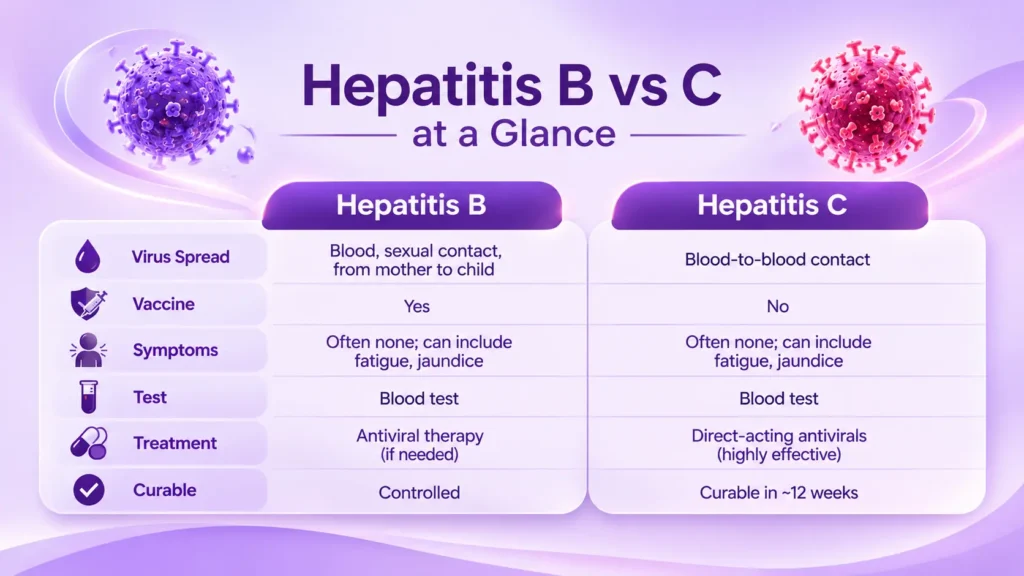
Hepatitis B and C are both viral liver infections, but they are caused by different viruses and treated differently. Hepatitis B can be prevented with a vaccine and is usually controlled with long-term tablets, while hepatitis C has no vaccine but can be cured.
- Hepatitis B (HBV): spreads through blood, unprotected sex, and from mother to baby at birth.
- Hepatitis C (HCV): spreads mostly through infected blood, such as unsafe injections or unscreened transfusions.
- Burden in India: the WHO 2024 Global Hepatitis Report estimates about 29.8 million people with hepatitis B and 5.5 million with hepatitis C in 2022, the second-highest number in the world after China.
- Casual contact is safe: hugging, sharing meals, or using the same toilet does not spread either virus.
The main takeaway is simple: the virus decides the treatment, so a correct diagnosis comes first.
Hepatitis B and C Symptoms
Most people with hepatitis B or C have no symptoms at all for years. When symptoms do appear, they include fatigue, fever, nausea, loss of appetite, stomach discomfort, dark urine, pale stools, and yellowing of the eyes and skin (jaundice).
- Acute (new) infection: mild fever, tiredness, body ache, nausea, and dark urine. Many adults clear hepatitis B on their own at this stage.
- Chronic (long-term) infection: usually silent, or just vague tiredness and a dull ache on the upper right side of the abdomen.
- Advanced liver damage: swollen legs or belly, easy bruising, vomiting blood, confusion, or persistent jaundice.
Same symptoms, different virus: hepatitis B and C feel almost identical, so only a blood test can tell them apart. Feeling well does not mean the liver is safe, testing is the only reliable check.
How Are Hepatitis B and C Diagnosed?
Doctors diagnose hepatitis B with an HBsAg blood test and hepatitis C with an anti-HCV antibody test, followed by a viral load (PCR) test to confirm active infection. Liver function tests and an ultrasound or FibroScan then show how much damage has occurred.
- HBsAg and anti-HCV: screening tests that show whether the virus is present.
- HBV DNA and HCV RNA (viral load): confirm active infection and guide treatment.
- Liver function tests (SGOT, SGPT, bilirubin): show how the liver is coping. Raised values point to liver inflammation but do not name the virus.
- Ultrasound, FibroScan, or a fibrosis score: estimate scarring.
- India’s National Viral Hepatitis Control Programme (NVHCP) offers free screening and confirmatory tests at government centres.
An early, accurate diagnosis is what separates a simple tablet course from a transplant discussion.
Hepatitis B Treatment in Delhi
Chronic hepatitis B is usually treated with a daily antiviral tablet, most commonly tenofovir or entecavir. These medicines suppress the virus and protect the liver, but they generally control hepatitis B rather than cure it, so treatment is often long term.
- Not everyone needs medicine immediately. Doctors look at viral load, liver enzymes, and scarring before starting.
- Under NVHCP guidelines, uncomplicated cases are treated with tenofovir 300 mg once a day.
- Regular blood tests and ultrasound every few months track how well the virus is controlled.
- Never stop hepatitis B tablets on your own, as the virus can flare up and harm the liver.
- Vaccination protects family members, and newborns of infected mothers should get the vaccine within 24 hours of birth.
With regular follow-up, many people with hepatitis B live long, healthy lives.
Hepatitis C Treatment in Delhi and Can It be Cured?
Hepatitis C can be cured. Modern direct-acting antiviral (DAA) tablets, such as sofosbuvir with daclatasvir, taken for about 12 weeks clear the virus in the vast majority of people, and the WHO reports cure rates above 95%.
- Treatment is a short oral course with few side effects, not the injections used in the past.
- A blood test about 12 weeks after finishing treatment (called SVR-12) confirms the cure.
- Under NVHCP, the standard 84-day sofosbuvir and daclatasvir regimen is available free at government treatment centres.
- If the virus has already caused advanced damage, our blog on hepatitis C and liver transplant in Delhi explains the next options.
- Cure stops the virus from damaging the liver further, but already-formed scarring may need continued monitoring.
- You can catch hepatitis C again, so safe injection and blood practices still matter.
Getting treated early offers the best chance of avoiding long-term liver damage.
When Do Hepatitis B and C Lead to Cirrhosis, Liver Cancer, or Transplant?
Long-standing, untreated hepatitis B or C can scar the liver (cirrhosis), cause liver failure, or lead to liver cancer. WHO data show chronic hepatitis B accounts for about 40 to 50% of liver cancer and 20 to 30% of cirrhosis cases in India.
- Cirrhosis develops slowly, often over 15 to 25 years, and can be slowed if the virus is controlled. You can read more about this on our page about liver cirrhosis treatment in Delhi NCR.
- People with hepatitis B or cirrhosis need regular ultrasound scans to catch liver cancer early, when it is easier to treat.
- Sudden or severe deterioration may become liver failure, which needs urgent hospital care.
- When the liver can no longer function despite medicines, a liver transplant may be the best option, with eligibility guided by the MELD score.
- Broader conditions affecting the organ are covered under liver disease treatment in Delhi.
Most people never reach this stage if the infection is found and treated in time.
Hepatitis B and C Prevention
You can prevent hepatitis B with the three-dose vaccine and hepatitis C by avoiding exposure to infected blood. Safe practices protect you, your family, and your newborn.
- Get vaccinated for hepatitis B if you are an unvaccinated adult, a healthcare worker, or a close contact of an infected person.
- Insist on new, sealed syringes and needles for injections, tattoos, and piercings.
- Use barrier protection during sex, especially with new or multiple partners.
- Do not share razors, toothbrushes, or nail clippers.
- Pregnant women should be screened for hepatitis B so the baby can be protected at birth.
- Limit alcohol and keep weight healthy, as both can speed up liver damage. Our guide on fatty liver treatment in Delhi covers this in detail.
Prevention is simpler and far cheaper than treating advanced liver disease.
Who Should Get Tested for Hepatitis B and C?
Anyone who has had a risk exposure should get tested, even without symptoms. Screening is a simple blood test and is the only way to find silent infection early.
- You received a blood transfusion or surgery before blood screening became routine.
- You have had tattoos, piercings, or dental work with unsterilised equipment.
- A family member has hepatitis B or C.
- You are pregnant or planning pregnancy.
- You work in healthcare or have had a needle-stick injury.
- Your liver enzymes have come back raised in a routine check-up.
Testing once is far easier than discovering the infection years later through complications.
Conclusion
A positive hepatitis report is a starting point, not a verdict. With the right tests, timely treatment, and regular follow-up, most people protect their liver for life. If you or a family member has a hepatitis report you would like to understand better, speaking with a liver specialist in Delhi can help you know what the numbers mean and what to do next.
Sources
The Print – WHO Global Hepatitis Report 2024
Business Standard – WHO Global Hepatitis Report 2024
NVHCP – Hepatitis Testing and Treatment Flyer
MoHFW – Technical Guidelines for Diagnosis & Management of Hepatitis B

 WhatsApp