
Fatty Liver Treatment in Delhi
Fatty liver is now one of the most common liver conditions among Indian adults, and most people find out by chance on an ultrasound or a routine blood test. The encouraging part is that early fatty liver can often be reversed. This guide explains the stages, lifestyle changes and medical options for fatty liver treatment in Delhi, and the point at which the condition needs a liver specialist’s attention.
At IHPBLT, Dr. Abhideep Chaudhary’s team works with fatty liver, cirrhosis, liver failure, liver transplant and HPB (hepato-pancreato-biliary) conditions every day.
What Is Fatty Liver Disease and How Common Is It in India?
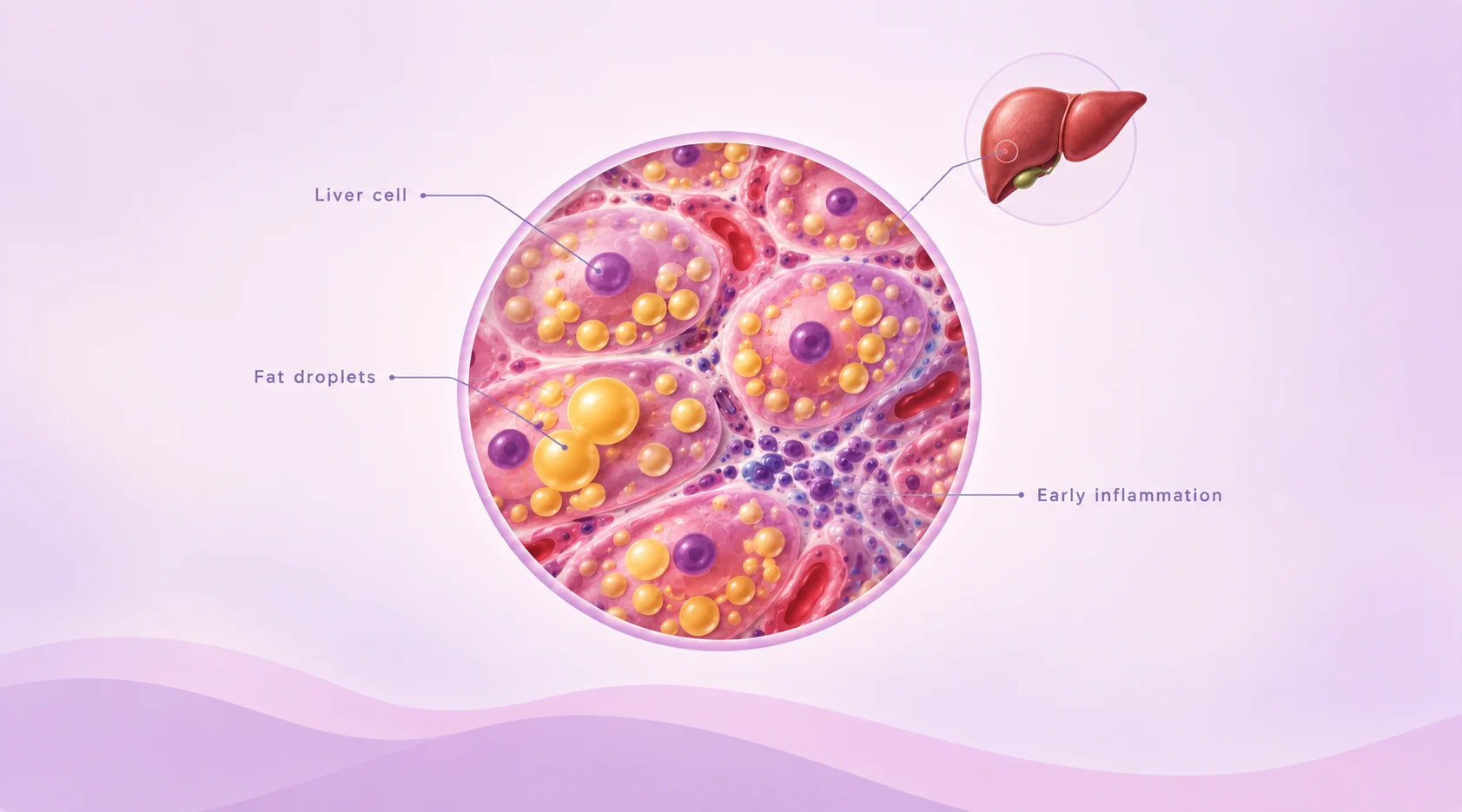
Fatty liver disease means extra fat has built up inside liver cells. It is now called MASLD (metabolic dysfunction-associated steatotic liver disease) and is usually linked to weight gain, diabetes, high cholesterol or insulin resistance rather than alcohol. A large Lancet study found that nearly four in ten Indian adults now have it.
- MASLD was earlier called NAFLD. The inflamed, more harmful form is called MASH.
- In the Phenome India study, 6.3% of people with fatty liver already had significant scarring, compared with 1.7% of those without it.
- It is not limited to people who are overweight. The study confirmed “lean” fatty liver, where body mass index is normal.
- Urban lifestyles, long sitting hours, sugary drinks and refined carbohydrates add to the risk.
Since fatty liver is so common and so quiet, checking your liver early is more useful than waiting for symptoms.
What Are the Symptoms and Stages of Fatty Liver?
Most people with fatty liver have no symptoms. When symptoms appear, they include constant tiredness, a dull ache in the upper right abdomen and a feeling of fullness. The disease moves through four stages: simple fatty liver, MASH (inflammation), fibrosis (scarring) and cirrhosis. The first stages are reversible.
- Ultrasound “grades” (grade 1, 2 or 3) describe how much fat is present, not how much scarring there is.
- Scarring decides the real risk, which is why a stiffness test matters more than the grade alone.
- Dark urine, yellow eyes, leg swelling or a swollen belly point to advanced disease.
Knowing your stage, not just your grade, is what guides the right treatment.
Reach Out for Expert Care
How Is Fatty Liver Diagnosed?
Fatty liver is diagnosed with blood tests, an ultrasound and a FibroScan, which measures liver fat and stiffness without a needle. A liver biopsy is needed only in selected cases. Doctors also rule out hepatitis B, hepatitis C and alcohol as other causes.
- Blood tests: liver enzymes (SGOT/SGPT), blood sugar or HbA1c, cholesterol and triglycerides.
- Ultrasound: shows fat in the liver but cannot measure scarring.
- FibroScan (elastography): a painless scan that estimates scarring.
- FIB-4 score: a simple calculation from age and blood values that flags higher scarring risk.
- MRI or biopsy: reserved for unclear or high-risk cases.
A complete work-up in one visit saves time and avoids repeated, partial tests.
Can Fatty Liver Be Reversed?
Yes, in the early stages fatty liver can be reversed. Losing at least 5% of body weight is linked with less liver fat, about 7% with resolution of MASH, and 10% or more with fibrosis regression. In a landmark study, 90% of people who lost 10% or more of their weight had their steatohepatitis resolve.
- In that same study of 293 patients, 45% of those who lost 10% or more also had scarring regress.
- Slow, steady loss of about 0.5 to 1 kg a week is safer than crash dieting, which can inflame the liver.
- Early scarring can improve, but advanced cirrhosis cannot be fully undone.
- Results depend on keeping the weight off, not just losing it.
The earlier you start, the more reversible the damage tends to be.
What Is the Best Diet for Fatty Liver Treatment?
The best diet for fatty liver is a balanced, home-style plan low in sugar, refined flour and deep-fried food, with more vegetables, dal, whole grains, nuts and fish. Combined with at least 150 minutes of exercise a week, diet and lifestyle remain the foundation of treatment.
- Cut sugary drinks, packaged juices, sweets and bakery items first. These raise liver fat faster than most foods.
- Swap white rice, maida and white bread for millets, oats, brown rice or whole wheat.
- Add protein from dal, sprouts, paneer, eggs and fish. Use less oil and avoid reheated cooking oil.
- Walk briskly for 30 minutes on most days and add two sessions of strength training.
- Sleep 7 to 8 hours and avoid alcohol, as it adds to liver injury.
- Control diabetes, blood pressure and cholesterol, since they drive fatty liver.
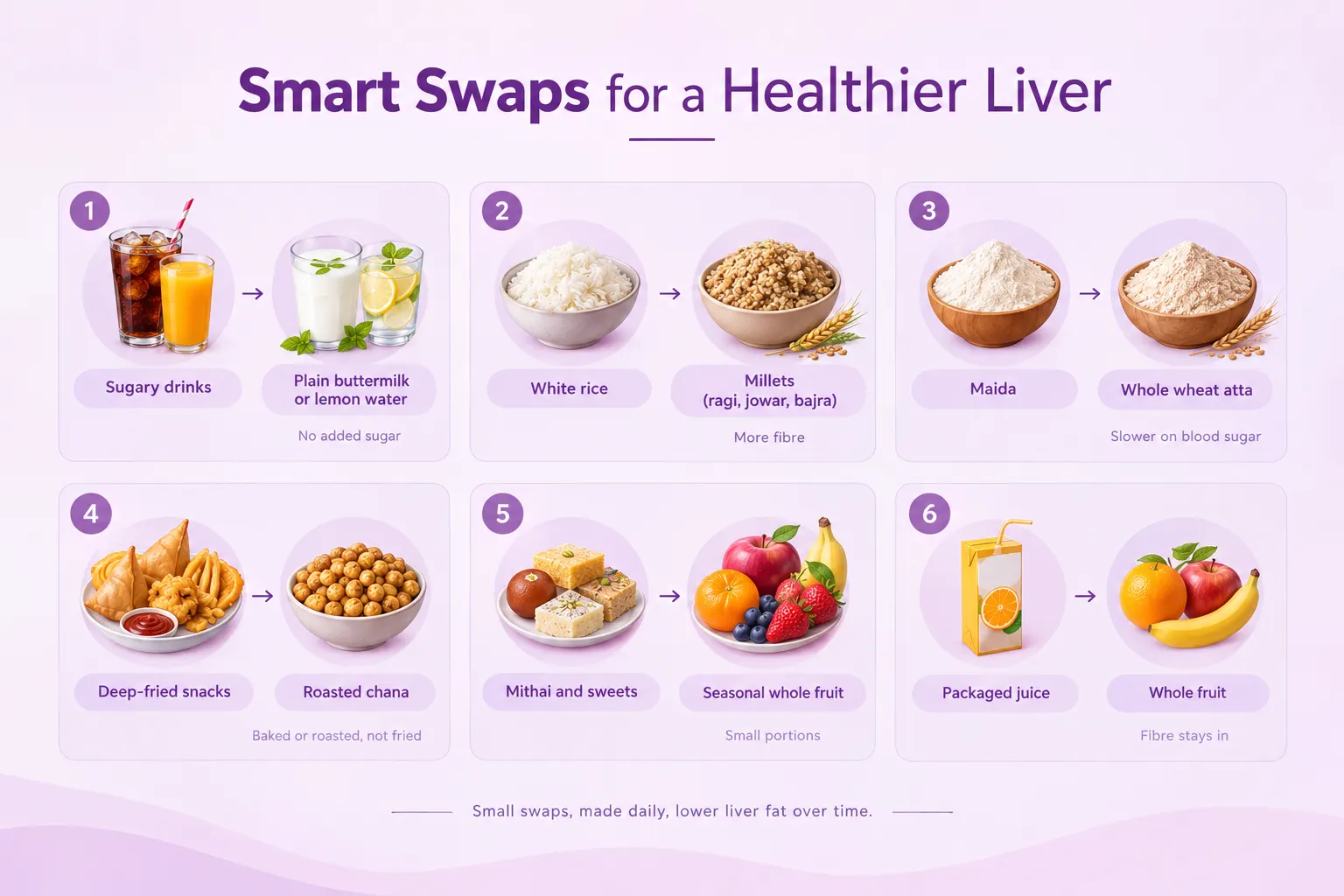
Small, repeatable habits work better than strict plans that are hard to sustain.
Are There Medicines for Fatty Liver?
No single medicine cures fatty liver for everyone. Treatment focuses on managing diabetes, cholesterol and blood pressure, while selected patients with MASH and scarring may be offered specific medicines. In July 2026, India’s drug regulator approved semaglutide for non-cirrhotic MASH with moderate-to-advanced scarring, alongside diet and physical activity.
- In the global ESSENCE trial, semaglutide resolved liver inflammation in 63% of patients and improved scarring in 37%.
- Resmetirom, approved in the US for MASH, is expected in India only after ongoing studies and patent expiry.
- Vitamin E or pioglitazone may be considered in selected patients after proper evaluation.
- Weight-loss (bariatric) surgery may help people with severe obesity and MASH.
- Supplements and “liver detox” products have no proven benefit and can harm the liver.
Medicines work best alongside lifestyle change, and only after your liver specialist confirms the stage.
Reach Out for Expert Care
When Does Fatty Liver Become Serious?
Fatty liver becomes serious when inflammation and scarring progress to advanced fibrosis or cirrhosis, where the liver starts to fail. NASH-related cirrhosis accounted for approximately 20% of liver transplants in India in 2022. Fatty liver can also raise the risk of liver cancer.
- Warning signs include jaundice, swelling in the legs or abdomen, black stools, vomiting blood and confusion.
- Cirrhosis needs structured care, as explained in our guide to liver cirrhosis treatment in Delhi NCR.
- Confusion or sleepiness can signal hepatic encephalopathy, a complication of advanced liver disease.
- When the liver can no longer cope, a liver transplant may be the only lasting option, and eligibility is assessed against defined criteria for liver transplant.
- Long-standing scarring also calls for regular scans, because liver cancer can develop silently.
Catching the problem before cirrhosis keeps all your options open.
When Should You See a Liver Specialist in Delhi?
You should see a liver specialist if your ultrasound shows fatty liver along with diabetes, obesity or high cholesterol, if your liver enzymes stay raised, or if you have any warning symptoms. A specialist can stage your disease and plan treatment for liver disease in Delhi.
- Carry old ultrasounds, liver function tests, HbA1c and a list of current medicines.
- Note your weight history, alcohol intake and family history of liver disease.
- Ask for your fibrosis (stiffness) result, not just the fat grade.
- People with diabetes should be screened for fatty liver every year.
An early, well-prepared evaluation often turns a worrying report into a clear, manageable plan.
The Training Behind Fatty Liver Treatment in Delhi
Dr. Abhideep Chaudhary is a liver transplant and HPB surgeon in Delhi. He trained in General Surgery (MS) and completed a hepatobiliary and multiorgan transplant fellowship at the Thomas Starzl Transplantation Institute, University of Pittsburgh Medical Center. His approach to fatty liver focuses on early staging, realistic lifestyle and medical planning, and timely referral before scarring becomes advanced.
His expertise includes:
- Liver disease from fatty liver to cirrhosis and liver failure.
- Liver transplant, including living donor liver transplant.
- Paediatric liver transplant.
- Liver, pancreatic and bile duct diseases.
- Minimally invasive liver and HPB surgery.
If you are looking for a liver specialist in Delhi for fatty liver, these are the points worth keeping in mind. Look for transplant-level liver training, a clear plan that checks scarring (not just the ultrasound grade), and a full team of hepatology, nutrition, endocrinology and radiology specialists working together.
Consultation for Fatty Liver Treatment in Delhi: What to Prepare?
A first consultation works best when you bring your earlier reports, a record of your weight and habits, and a list of questions. This helps the team judge the stage of fatty liver, the scarring risk and the right next step in one visit.
Before the consultation, keep these ready:
- Recent ultrasound, FibroScan, CT or MRI reports.
- Liver function tests (SGOT/SGPT), HbA1c or blood sugar, and cholesterol and triglyceride reports.
- Hepatitis B and C reports, if done.
- A list of current medicines and supplements, including diabetes and cholesterol medicines.
- Your weight history, diet routine, alcohol intake and family history of liver disease.
- Questions to ask: what stage the fatty liver is, whether there is any scarring, what weight target is realistic, whether medicines are needed, and how often follow-up scans should be done.
If you are searching for a fatty liver specialist in Delhi NCR, these details help you compare options clearly. Patients and families can discuss the diagnosis, treatment options and follow-up plan during a consultation, at their own pace.
Sources:
- Vilar-Gomez et al., “Weight loss through lifestyle modification significantly reduces features of nonalcoholic steatohepatitis,” Gastroenterology (2015)
- Machado MV, “MASLD treatment: a shift in the paradigm is imminent,” Frontiers in Medicine (2023)
- “MASLD: time to optimise regional research priorities,” The Lancet Regional Health – Southeast Asia (2026), PMC12931381
- CDSCO approval of semaglutide (Wegovy) for MASH in India, BioSpectrum India (July 2026)
- The Phenome India paper (Arvind et al.) in The Lancet Regional Health – Southeast Asia (2026).
- The ESSENCE trial
Frequently Asked Questions
Is grade 1 fatty liver dangerous? expand_more
Grade 1 fatty liver is usually mild and reversible with weight loss and lifestyle changes. It still needs a scarring check, as some people have fibrosis even at grade 1.
Can fatty liver cause no symptoms? expand_more
Yes. Most people feel well until the disease is advanced, which is why screening matters if you have diabetes, obesity or raised cholesterol.
Does fatty liver need surgery? expand_more
Rarely. Surgery is considered only for severe obesity (bariatric surgery) or end-stage liver failure (liver transplant).
Can you get fatty liver without drinking alcohol? expand_more
Yes. Most fatty liver in India is not caused by alcohol. It is linked to excess weight, diabetes, high cholesterol and insulin resistance, and it can also occur in people with a normal body weight.
How long does it take to reverse fatty liver? expand_more
It depends on the stage. Liver fat can start to reduce within a few months of steady weight loss and lifestyle change, while scarring, if present, takes longer to improve. Follow-up blood tests and a FibroScan help track progress.
How can I book an appointment for fatty liver treatment in Delhi? expand_more
Appointments can be arranged through the contact details on the IHPBLT website’s contact page, or by visiting the clinic in person. It helps to keep your ultrasound, liver function tests, HbA1c and current medicine list ready so the first visit can cover staging and next steps.

Medically Reviewed by:
The IHPBLT Medical Editorial Team
 WhatsApp