

Pediatric Liver Transplant in Delhi
A pediatric liver transplant in Delhi is recommended for children with severe liver disease or liver failure when other treatments are no longer effective. At the IHPBLT Centre in Delhi, Dr. Abhideep Chaudhary, one of the best pediatric liver transplant surgeons in Delhi and his multidisciplinary team offer specialised transplant care, helping children achieve better long-term health and quality of life.
Pediatric liver transplantation yields exceptional outcomes, with a 12-month patient survival rate of 95.7% and a graft survival rate of 93.9% for deceased donor recipients, according to the OPTN/SRTR 2024 Annual Data Report. While overall waitlist mortality has dropped to 4.9 deaths per 100 patient-years, infants under age one face the highest risk at 15.9 deaths per 100 patient-years.

What is a Pediatric Liver Transplant?
Minimally invasive, patient-focused surgical care
A pediatric liver transplant is a life-saving surgery in which a child's damaged or failing liver is replaced with a healthy liver from a living or deceased donor. It is recommended for children with end-stage liver disease, acute liver failure, or certain inherited liver disorders when other treatments are no longer effective. Advances in surgical techniques and post-transplant care have made paediatric liver transplantation highly successful. With timely treatment, regular follow-ups, and lifelong medications, most children can achieve healthy growth, normal development, and an improved quality of life.
Pediatric Liver Transplant Process: Step by Step
A pediatric liver transplant involves careful evaluation, donor matching, surgery, and long-term follow-up. A multidisciplinary transplant team works closely with the family throughout every stage to ensure the best possible outcome for the child.
Comprehensive Evaluation
- Detailed medical examination and liver function assessment.
- Blood tests, imaging scans, and other investigations.
- The transplant team determines whether a liver transplant is the best treatment option.
Finding a Suitable Donor
- A compatible living donor is evaluated for medical fitness and liver compatibility.
- Another option is that the child is registered on the deceased donor waiting list based on medical urgency, blood group compatibility, body size, and organ availability.
- Once a suitable donor is identified, the transplant surgery is planned promptly.
Child Liver Transplant Surgery
- The diseased liver is carefully removed.
- The healthy donor liver (or a part of it) is transplanted.
- Blood vessels and bile ducts are connected to restore normal liver function.
- The surgery is performed under general anaesthesia by a specialised transplant team.
Intensive Post-Operative Care
- The child is monitored in the ICU.
- Doctors check liver function, blood flow, and recovery.
- Medications are started to prevent organ rejection and infection.
Recovery and Lifelong Follow-Up
- Regular follow-up visits and blood tests help monitor the new liver.
- Immunosuppressant medicines must be taken as prescribed.
- Most children gradually return to school, play, and normal daily activities with continued medical care.
Free first consultation — no obligation
Are There Any Risks?
For Liver Transplant in a Child
Like any major surgery, a pediatric liver transplant carries certain risks. However, with experienced transplant surgeons, advanced surgical techniques, and close post-operative monitoring, most complications can be identified early and managed effectively.
Potential risks include:
- Organ rejection by the body's immune system
- Infection due to immunosuppressant medications
- Bleeding or blood clot formation
- Bile duct leakage or narrowing
- Side effects of lifelong anti-rejection medicines
Regular follow-up visits, timely medications, and careful monitoring play a key role in ensuring a successful recovery and long-term liver health.
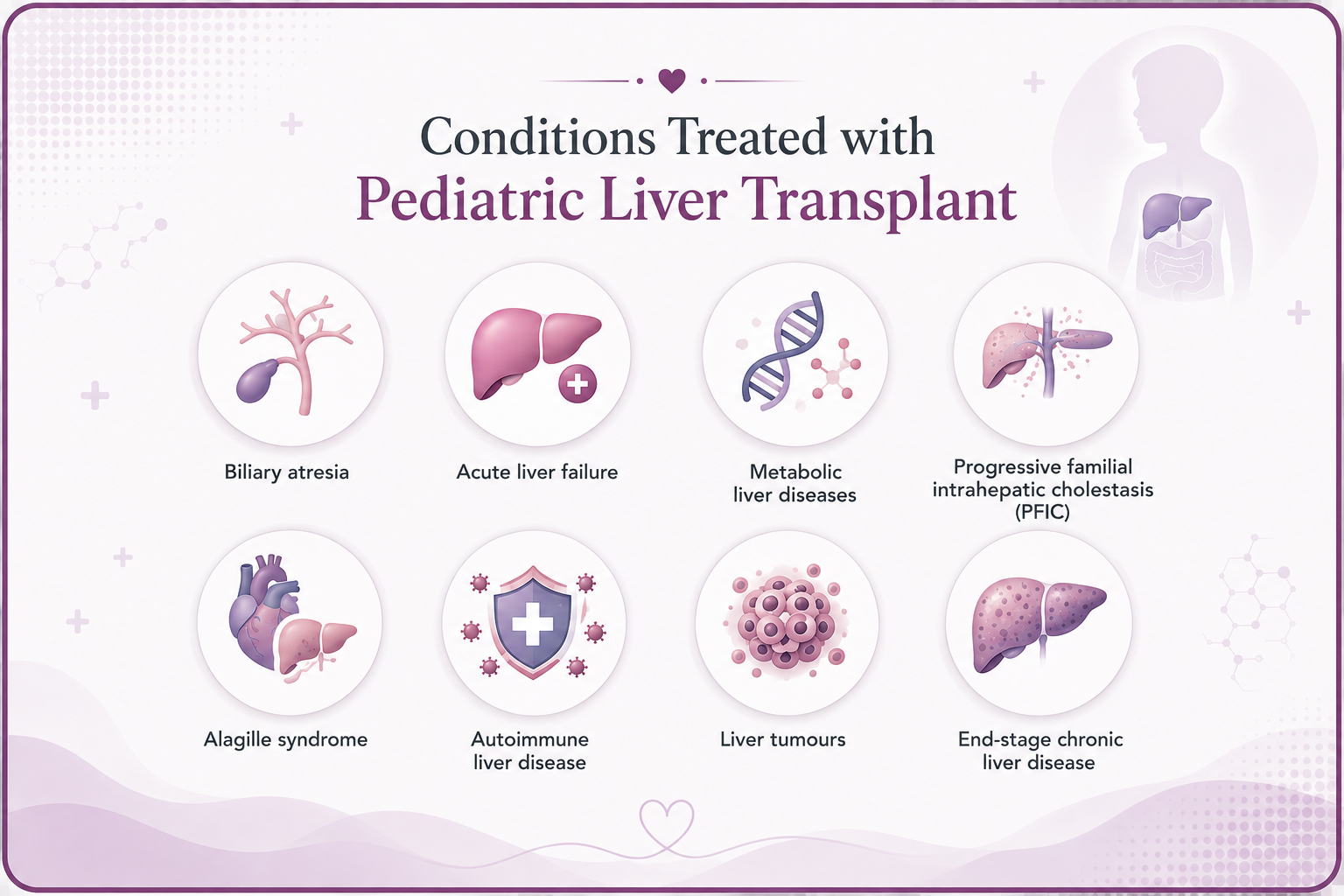
Conditions Treated with Pediatric Liver Transplant
A pediatric liver transplant may be recommended when a child's liver is severely damaged or no longer functions properly, and other treatments are unlikely to help.
Common pediatric conditions treated by liver transplant include:
- Biliary atresia – The most common reason for liver transplantation in children.
- Acute liver failure – Sudden and severe loss of liver function requiring urgent treatment.
- Metabolic liver diseases – Inherited disorders such as Wilson's disease, tyrosinaemia, or glycogen storage diseases.
- Progressive familial intrahepatic cholestasis (PFIC) – A genetic condition that causes progressive liver damage.
- Alagille syndrome – A genetic disorder affecting the liver, heart, and other organs.
- Autoimmune liver disease – When the immune system attacks healthy liver tissue.
- Liver tumours – Selected liver cancers, such as hepatoblastoma, when a transplant is the best treatment option.
- End-stage chronic liver disease – Severe liver damage caused by various congenital or acquired liver conditions.
Early evaluation by a paediatric liver transplant specialist can help determine the right treatment and improve long-term outcomes for your child.
Why Choose the IHPBLT Centre by Dr. Abhideep Chaudhary?
At the IHPBLT Centre, we combine advanced transplant expertise with compassionate, family-centred care to provide the best possible outcomes for children requiring a liver transplant.
- 2,000+ successful liver transplants with a strong focus on patient safety.
- Expert leadership by Dr. Abhideep Chaudhary, an internationally trained liver transplant surgeon with 20+ years of experience.
- Specialised paediatric liver transplant programme for infants, children, and adolescents.
- Comprehensive multidisciplinary care from evaluation and surgery to recovery and long-term follow-up.
- Advanced surgical technology and modern ICU facilities for safe, precise transplant procedures.
- Trusted by families from India and abroad for ethical, personalised, and high-quality liver transplant care.
Frequently Asked Questions
Pediatric Liver Transplant in Delhi
Is pediatric liver transplant in Delhi safe? expand_more
Yes, pediatric liver transplant in Delhi is considered safe when performed at an experienced transplant centre by a specialised multidisciplinary team. Advances in surgical techniques, anaesthesia, intensive care, and post-transplant monitoring have significantly improved safety and long-term outcomes. Early diagnosis, timely surgery, and regular follow-up also play an important role in a successful recovery.
What is the most common cause of pediatric liver transplant? expand_more
The most prevalent cause of a pediatric liver transplant is biliary atresia. Biliary atresia results in obstruction or injury to the bile ducts, which ultimately leads to liver damage. Some other causes include liver failure, liver diseases, PFIC (progressive familial intrahepatic cholestasis), Alagille syndrome, autoimmune liver disease, and some liver tumours.
How much is the pediatric liver transplant survival rate? expand_more
Pediatric liver transplantation has excellent success rates. According to the OPTN/SRTR 2024 Annual Data Report, the 12-month patient survival rate is 95.7%, with a graft survival rate of 93.9% for deceased donor recipients. Outcomes are generally better when the transplant is performed at experienced centres with comprehensive follow-up care.
What are the pediatric liver transplant outcomes? expand_more
The majority of children will have very good long-term prospects following a successful liver transplant. With proper medication, follow-ups, and a healthy lifestyle, many children will grow normally, go to school, play sports, and maintain a full, active life. Early transplantation and good post-transplantation care will greatly increase long-term success rates.
What is the pediatric liver transplant life expectancy? expand_more
Many children who undergo a successful pediatric liver transplant can live for decades with good liver function and an excellent quality of life. Life expectancy depends on the child's underlying condition, overall health, adherence to immunosuppressant medications, and regular medical follow-up. With proper care, many recipients reach adulthood and lead healthy, productive lives.
How long does pediatric liver transplant surgery take? expand_more
A pediatric liver transplant typically takes 6 to 12 hours, depending on the child's condition, the type of transplant, and surgical complexity. Following the procedure, the child is closely monitored in the intensive care unit (ICU) before being shifted to a regular hospital room for continued recovery.
Who can donate a liver for a pediatric liver transplant? expand_more
A liver donor may be a healthy living donor, usually a parent or close blood relative, or a deceased donor. Living donors undergo a thorough medical evaluation to ensure they are suitable for donation. Since the liver can regenerate, both the donor's remaining liver and the transplanted portion can grow over time.
How long is the hospital stay after a pediatric liver transplant? expand_more
Most children stay in the hospital for 2 to 4 weeks after a pediatric liver transplant, depending on their recovery and overall health. The initial stay includes intensive monitoring in the ICU, followed by ongoing care to ensure the new liver is functioning well before discharge.
What is the minimum age for a pediatric liver transplant? expand_more
There is no minimum age for a pediatric liver transplant. The procedure can be performed in infants, including newborns, when medically necessary. The decision depends on the child's liver disease, overall health, and whether transplantation offers the best chance of survival and long-term well-being.
How can I book a consultation with Dr. Abhideep Chaudhary? expand_more
To book a consultation with Dr. Abhideep Chaudhary, you can contact the IHPBLT Centre by phone or submit an appointment request through the website. During your consultation, Dr. Chaudhary and his team will evaluate your child's condition, review medical reports, and discuss the most appropriate treatment options, including whether a liver transplant is recommended.
What is the pediatric liver transplant cost in India? expand_more
The cost of a pediatric liver transplant in India varies depending on several factors, including the child's medical condition, the type of transplant (living or deceased donor), hospital stay, ICU care, medications, and post-operative follow-up. A detailed cost estimate is provided after a comprehensive medical evaluation.
How to find the best pediatric liver transplant hospital in India? expand_more
Choosing the right pediatric liver transplant hospital in India can significantly impact your child's treatment and recovery. Look for a hospital with experienced transplant surgeons, a dedicated pediatric liver transplant team, advanced ICU facilities, and a strong track record of successful transplant outcomes.
 WhatsApp