

GI Surgery in Delhi
GI surgery is a specialised branch of surgery that treats diseases affecting the digestive system, including the oesophagus, stomach, intestines, liver, pancreas, gallbladder, and bile ducts. If you are seeking GI surgery in Delhi, advanced laparoscopic and robotic techniques have made many procedures safer, less invasive, and associated with faster recovery and improved outcomes.
The need for specialised GI surgical care continues to grow worldwide. Surgeries involving the small intestine and colon account for 39.3% of all GI procedures, while gallbladder surgeries make up 23.2%, highlighting the increasing burden of digestive diseases. At the IHPBLT Centre, Dr. Abhideep Chaudhary combines advanced surgical expertise with a multidisciplinary approach to deliver personalised, evidence-based care for patients with complex gastrointestinal disorders.
What is GI Surgery?
GI surgery is a specialised surgical treatment for diseases affecting the digestive system, including the oesophagus, stomach, intestines, liver, pancreas, gallbladder, and bile ducts. It is recommended when medications or other non-surgical treatments are no longer effective. Depending on the condition, surgery may be performed using minimally invasive (laparoscopic or robotic) or open surgical techniques.
GI surgery helps diagnose, treat, and manage a wide range of digestive disorders, from benign conditions to complex gastrointestinal cancers. While advances in surgical techniques have significantly improved outcomes, major GI procedures still require specialised expertise.
The Gastrointestinal Surgical Outcomes Study (GISOS) reported a 30.5% 30-day postoperative complication rate following major GI surgery, highlighting the importance of treatment at experienced centres (GISOS, 2024). At the IHPBLT Centre, Dr. Abhideep Chaudhary provides personalised, evidence-based surgical care tailored to each patient’s condition, ensuring the safest possible treatment and the best long-term outcomes.
Benefits of advanced GI surgery include:
- Relief from persistent digestive symptoms
- Treatment of benign and cancerous diseases
- Improved digestive function and quality of life
- Minimally invasive options for eligible patients
- Faster recovery with reduced postoperative pain
What are the Types Of GI Surgery?
GI surgery includes different procedures based on the affected organ and underlying condition. These may involve surgery for the upper digestive tract, liver and pancreas, colon and rectum, hernias, or gastrointestinal cancers. Whenever possible, minimally invasive techniques are used to promote quicker recovery and fewer complications.
Common types of GI surgery include:
Upper GI Surgery
- Upper GI surgery is performed to treat conditions affecting the oesophagus, stomach, and small intestine.
- It is commonly recommended for patients with gastroesophageal reflux disease (GERD), hiatal hernias, stomach ulcers, oesophageal tumours, stomach tumours, and other disorders of the upper digestive tract.
Hepatobiliary & Pancreatic Surgery
- Hepatobiliary and pancreatic surgery focuses on diseases of the liver, gallbladder, bile ducts, and pancreas.
- It is performed to treat conditions such as liver tumours, gallstones, bile duct obstruction, pancreatic tumours, chronic pancreatitis, and other complex hepatopancreatobiliary disorders.
Colorectal Surgery
- Colorectal surgery is used to diagnose and treat diseases affecting the colon, rectum, and anus.
- It is commonly performed for colorectal cancer, diverticular disease, inflammatory bowel disease, rectal prolapse, and benign colorectal growths.
GI Cancer Surgery
- GI cancer surgery involves the removal of cancerous tumours from the digestive system.
- It may be recommended for cancers of the oesophagus, stomach, liver, pancreas, colon, rectum, and bile ducts, often as part of a comprehensive cancer treatment plan.
Hernia Surgery
- Hernia surgery repairs weakened areas of the abdominal wall where organs or tissues protrude.
- It is commonly performed for inguinal, ventral, incisional, umbilical, and hiatal hernias to relieve symptoms and prevent complications.
Minimally Invasive GI Surgery
- Many gastrointestinal procedures can now be performed using minimally invasive techniques, including laparoscopic and robotic-assisted surgery.
- Compared with traditional open surgery, these approaches generally involve smaller incisions, less postoperative pain, reduced blood loss, shorter hospital stays, quicker recovery, and minimal scarring.
Reach Out for Expert Care
GI Surgery: Complete Treatment Process
The GI surgery process typically includes consultation, diagnostic evaluation, personalised treatment planning, surgery, postoperative care, and follow-up. A multidisciplinary approach helps ensure safe treatment and optimal recovery. Here are the steps:
1. Initial Consultation
Your surgeon will:
- Review your symptoms and medical history
- Perform a physical examination
- Discuss previous treatments and investigations
2. Diagnostic Evaluation
You may require:
- Blood tests
- Ultrasound
- CT scan or MRI
- Endoscopy
- Colonoscopy
- Other specialised investigations
3. Treatment Planning
Based on your diagnosis, your surgeon will determine:
- Whether surgery is necessary
- The most suitable surgical approach
- The expected benefits and recovery timeline
4. Surgery
The procedure is performed under general anaesthesia using either:
- Laparoscopic surgery
- Robotic-assisted surgery
- Open surgery (when required)
5. Recovery
After surgery, your care includes:
- Pain management
- Early mobilisation
- Nutritional support
- Wound care
- Monitoring for complications
6. Follow-Up Care
Regular follow-up visits help:
- Monitor healing
- Assess recovery
- Address any concerns
- Support long-term digestive health
Are There Any Risks?
Like any surgical procedure, GI surgery carries some risks. However, when performed by an experienced GI surgeon in Delhi using advanced techniques, complications are uncommon, and every precaution is taken to ensure patient safety.
Possible risks include:
- Bleeding
- Infection
- Blood clots
- Leakage from surgical connections
- Injury to nearby organs
- Anaesthesia-related complications
- Temporary digestive problems during recovery
The risk of complications depends on:
- Your overall health
- The type and complexity of surgery
- Existing medical conditions
- The stage of the disease being treated
Your surgical team will explain all potential risks, answer your questions, and guide you through every step before the procedure.
Conditions Treated with GI Surgery
GI surgery is used to treat a wide range of diseases affecting the digestive tract, liver, pancreas, gallbladder, and bile ducts. It plays a vital role in managing both non-cancerous and cancerous gastrointestinal conditions.
Conditions commonly treated with GI surgery include:
- Gastrointestinal cancers
- Liver tumours
- Pancreatic tumours
- Gallstones and gallbladder disease
- Bile duct disorders
- Gastroesophageal reflux disease (GERD)
- Hiatal hernia
- Colorectal cancer
- Diverticular disease
- Crohn’s disease
- Ulcerative colitis
- Intestinal obstruction
- Stomach tumours
- Appendicitis
- Benign gastrointestinal growths and polyps
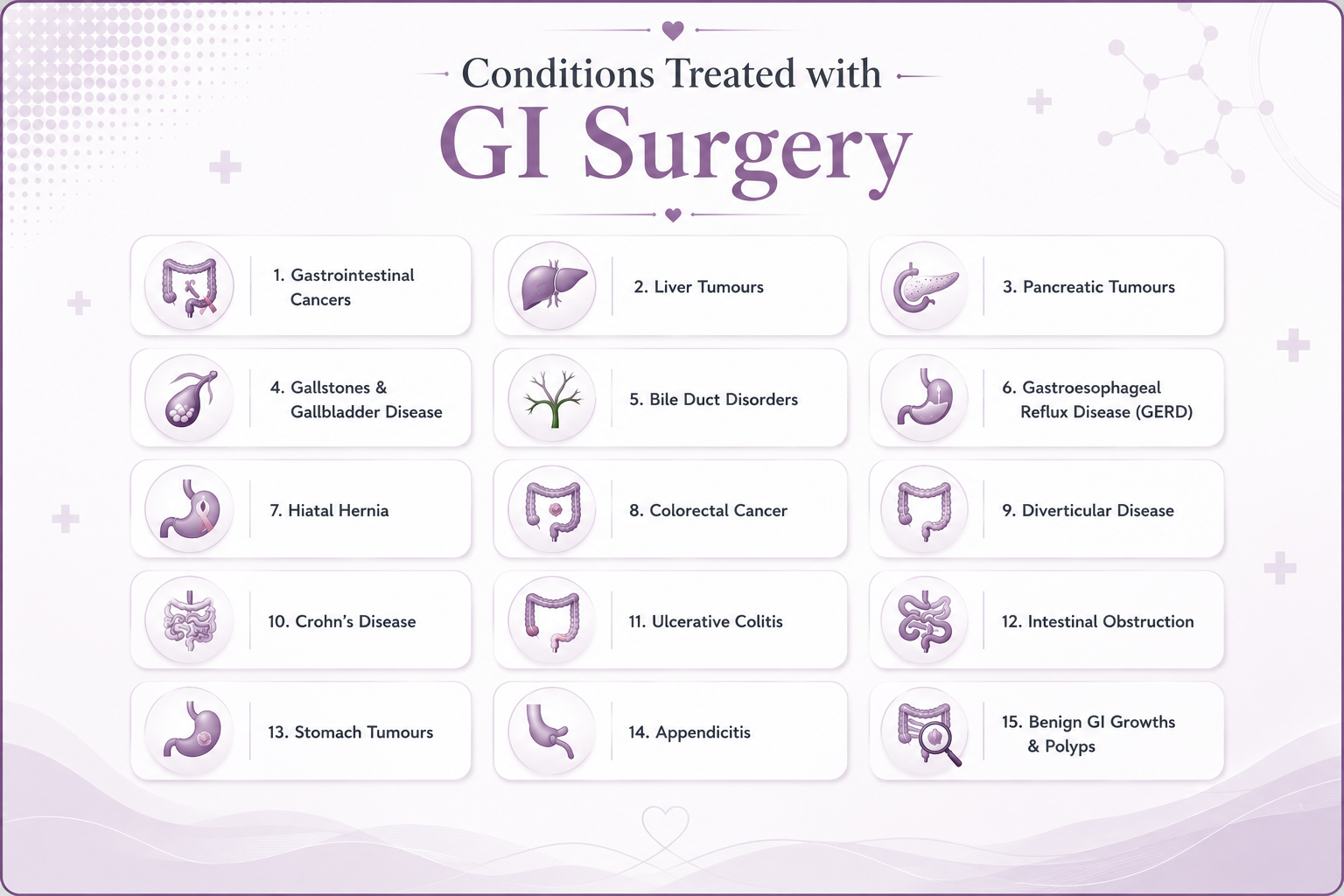
Treatment is personalised based on the patient’s diagnosis, overall health, and the severity of the condition, with the goal of achieving the best possible outcomes while preserving digestive function.
Frequently Asked Questions(FAQs)
1. What is GI bypass surgery?
GI bypass surgery refers to surgical procedures that create a new pathway for food or digestive contents to bypass a diseased or blocked portion of the gastrointestinal tract. It is commonly performed for conditions such as stomach or intestinal obstruction, certain gastrointestinal cancers, and, in some cases, obesity. The exact procedure depends on the underlying condition and the patient’s overall health.
2. What is the GI surgery full-form?
GI surgery stands for Gastrointestinal Surgery. It is a specialised field of surgery that focuses on treating diseases affecting the digestive system, including the oesophagus, stomach, small intestine, colon, rectum, anus, liver, pancreas, gallbladder, and bile ducts.
3. What is the cost of GI surgery in Delhi?
The GI surgery cost in Delhi varies depending on several factors, including the type of surgery, the complexity of the condition, the surgical approach (laparoscopic, robotic, or open), hospital stay, and postoperative care. After a detailed consultation and evaluation, your surgeon can provide a personalised treatment plan and cost estimate.
4. How to find the best GI surgeon in Delhi?
Choosing the right GI surgeon involves considering factors such as the surgeon’s experience, expertise in managing complex gastrointestinal conditions, success rates, and proficiency in minimally invasive surgical techniques. It is also important to select a surgeon who works with a multidisciplinary team and provides comprehensive care before, during, and after surgery to ensure the best possible outcomes. Dr. Abhideep Chaudhary is among the best surgeon for managing gastrointestinal conditions in Delhi.
5. Which hospital is the best for GI surgery in Delhi?
The ideal hospital for GI surgery should offer experienced GI surgeons, advanced surgical technology, modern operation theatres, intensive care support, and comprehensive diagnostic and postoperative care. Choosing a centre with expertise in managing both routine and complex gastrointestinal conditions ensures high-quality treatment and better patient outcomes. IHPBLT, BLK-Max is equipped with advanced technology and infrastructure, top surgeons, and dedicated multidisciplinary care team.
6. Does gallbladder stone gall in GI surgery?
Yes. Gallbladder stone surgery (cholecystectomy) is a type of GI surgery. Since the gallbladder is part of the digestive (hepatobiliary) system, surgery to remove the gallbladder for symptomatic gallstones or related complications falls under gastrointestinal surgery.
7. What are upper GI surgery procedures?
Upper GI surgery refers to procedures performed on the upper digestive tract, including the oesophagus, stomach, and duodenum. These procedures may be carried out to treat conditions such as gastroesophageal reflux disease (GERD), hiatal hernia, stomach ulcers, oesophageal disorders, stomach cancer, and gastric tumours. Depending on the condition, surgery may be performed using minimally invasive laparoscopic or robotic techniques, or through conventional open surgery when required.

Medically Reviewed by:
The IHPBLT Medical Editorial Team
Why Choose Dr. Abhideep Chaudhary for GI Surgery in Delhi?
Choosing an experienced GI surgeon is essential for accurate diagnosis, safe surgery, and a smooth recovery. At the IHPBLT Centre, Dr. Abhideep Chaudhary and his multidisciplinary team deliver advanced gastrointestinal surgical care using the latest techniques and a patient-first approach.
- 20+ years of expertise in GI, HPB, and advanced laparoscopic surgery.
- Internationally trained surgeon with fellowship training at the Thomas Starzl Transplantation Institute, UPMC, USA.
- Advanced minimally invasive and complex GI surgical procedures for faster recovery and improved outcomes.
- Multidisciplinary care with gastroenterologists, radiologists, anaesthetists, and critical care specialists.
- State-of-the-art infrastructure with advanced diagnostics, modern operation theatres, and dedicated ICU support.
- Personalised care from consultation and surgery to recovery and long-term follow-up.
 WhatsApp