

Bile Duct Surgery in Delhi
Bile duct surgery is performed to restore the normal flow of bile from the liver to the small intestine when the bile ducts become blocked, narrowed, or damaged. The blockage may occur due to gallstones, bile duct strictures, injury after gallbladder surgery, inflammation, congenital abnormalities, or tumours such as bile duct (cholangiocarcinoma) or pancreatic cancer.
Depending on the underlying condition, the surgeon may remove the blockage during the bile duct blockage surgery, repair the damaged bile duct, or reconstruct it by creating a new pathway for bile drainage. In patients with bile duct cancer, surgery may also involve removing a portion of the liver, pancreas, gallbladder, or nearby lymph nodes to completely remove the tumour whenever possible.
Why is a Bile Duct Surgery Required?
Bile duct surgery is recommended when the blockage or damage cannot be effectively treated with medications or minimally invasive procedures such as ERCP or stenting. The primary goals of surgery are to restore bile flow, relieve symptoms, prevent permanent liver damage, and treat the underlying condition.
Your doctor may recommend bile duct surgery for:
- Bile duct stones that cannot be removed endoscopically
- Benign bile duct strictures (narrowing)
- Bile duct injuries following gallbladder surgery
- Bile duct (cholangiocarcinoma) or pancreatic cancer
- Congenital bile duct abnormalities
- Recurrent bile duct infections (cholangitis)
- Bile leakage or complete bile duct disruption after trauma or surgery
In patients with bile duct cancer, surgery offers the best chance of long-term disease control or cure when the tumour is localised and can be completely removed. If the cancer has spread extensively, surgery may still be performed to relieve symptoms such as jaundice and improve quality of life.
Types of Bile Duct Surgery
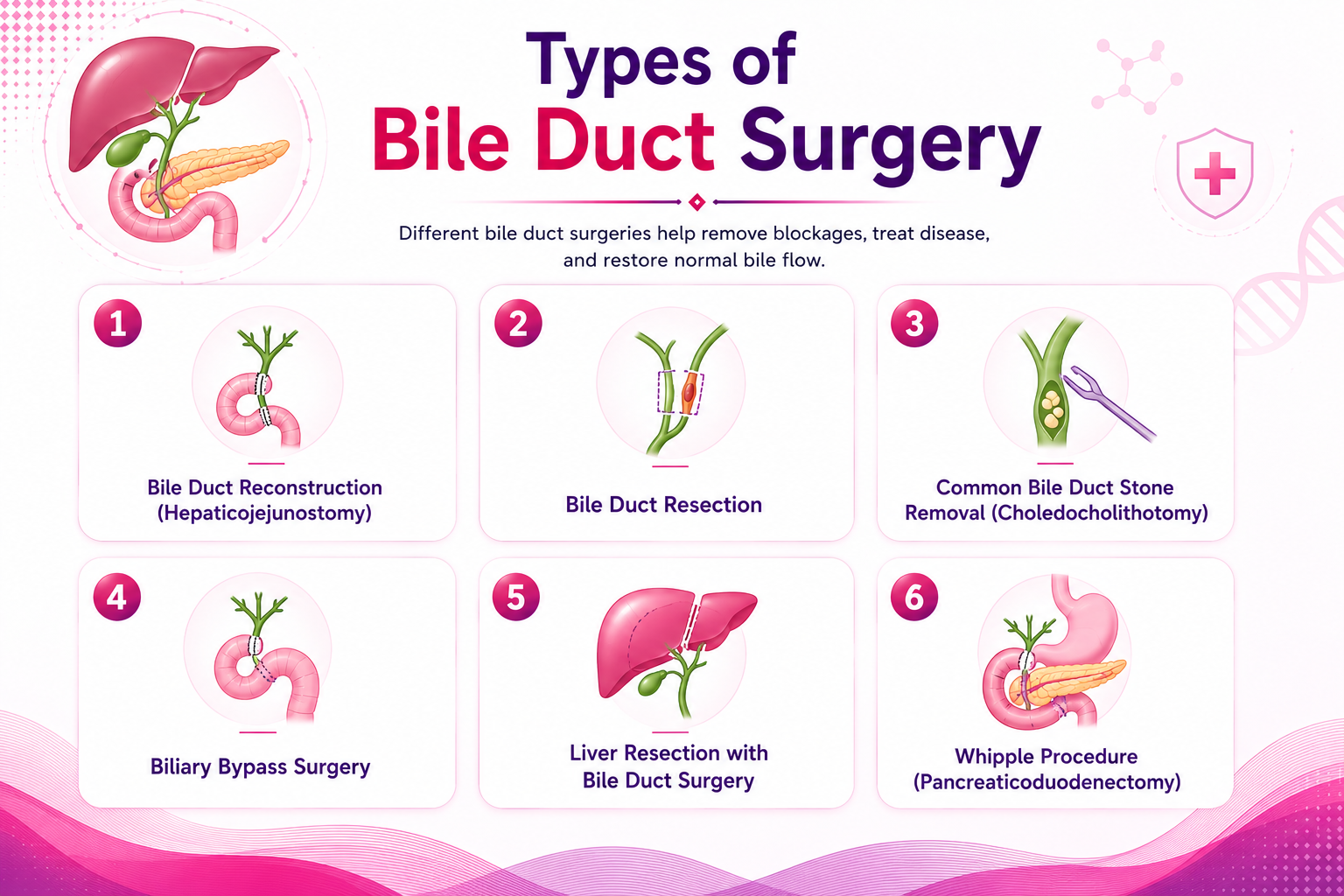
The type of bile duct surgery depends on the cause, location, and severity of the condition. Common procedures include:
- Bile Duct Reconstruction (Hepaticojejunostomy): A new connection is created between the healthy bile duct and the small intestine to restore bile flow. This is commonly performed for bile duct injuries and benign strictures.
- Bile Duct Resection: The diseased or cancerous portion of the bile duct is removed, followed by reconstruction of the remaining healthy bile duct.
- Common Bile Duct Stone Removal (Choledocholithotomy): Large or impacted stones are surgically removed from the common bile duct when endoscopic procedures such as ERCP are unsuccessful.
- Biliary Bypass Surgery: An alternative pathway is created for bile to flow around a blockage that cannot be safely removed, helping relieve jaundice and other symptoms.
- Liver Resection with Bile Duct Surgery: When a tumour involves both the liver and bile ducts, the affected part of the liver and bile duct is removed while preserving healthy tissue.
- Whipple Procedure (Pancreaticoduodenectomy): Performed for cancers affecting the lower bile duct or pancreas, this complex surgery removes the tumour along with nearby affected structures before reconstructing the digestive tract.
Reach Out for Expert Care
Bile Duct Surgery Process: Step by Step
The exact procedure depends on the cause of the bile duct problem. In most cases, the surgery involves the following steps:
- Pre-Surgical Assessment: Blood tests and imaging scans (CT, MRI/MRCP, or ultrasound) are performed to identify the location and extent of the blockage or damage.
- Administration of Anaesthesia: The surgery is carried out under general anaesthesia, ensuring you remain asleep and pain-free.
- Surgical Approach: The procedure is performed using open, laparoscopic, or robotic-assisted surgery, depending on the complexity of the condition.
- Treatment of the Bile Duct: The surgeon removes the blockage, repairs the injured bile duct, reconstructs the bile duct, or removes the affected tissue or tumour if required.
- Bile Duct Reconstruction: If a section of the bile duct is removed, a new connection is created between the healthy bile duct and the small intestine to restore normal bile flow.
- Closure of the Incision: After checking for bleeding and bile leakage, the incisions are closed, and a temporary drain may be placed if needed.
- Postoperative Recovery: Patients are monitored closely in the hospital, with recovery depending on the type and complexity of the surgery. Regular follow-up visits help ensure proper healing and bile drainage.
Are There Any Risks?
Like any major operation, bile duct surgery carries certain risks. However, these risks are significantly reduced when the procedure is performed by an experienced surgeon at a specialised centre.
Potential risks include:
- Bleeding
- Infection
- Bile leakage
- Narrowing (stricture) of the reconstructed bile duct
- Injury to nearby organs such as the liver, pancreas, or intestine
- Blood clots
- Anaesthesia-related complications
- Temporary digestive or nutritional difficulties after extensive surgery
- Liver failure in rare, complex cases
- Need for additional procedures if complications develop
Your surgeon will thoroughly evaluate your condition, explain the expected benefits and possible risks, and develop an individualised treatment plan to achieve the safest possible outcome.
Conditions Treated with Bile Duct Surgery
Bile duct surgery is performed to treat a wide range of conditions that obstruct, damage, or affect the normal flow of bile. Depending on the underlying cause, surgery may involve removing the blockage, repairing the bile duct, or reconstructing the biliary system to restore healthy bile drainage.
Common conditions treated with bile duct surgery include:
- Bile duct stones (Choledocholithiasis): Stones lodged in the bile duct that cannot be removed through ERCP.
- Bile duct strictures: Benign or malignant narrowing of the bile ducts that obstructs bile flow.
- Bile duct injuries: Damage to the bile ducts following gallbladder surgery, trauma, or previous abdominal procedures.
- Bile duct cancer (Cholangiocarcinoma): Tumours arising within the bile ducts that may require surgical removal and reconstruction.
- Pancreatic cancer involving the bile duct: Tumours near the pancreas that compress or invade the bile duct.
- Gallbladder cancer affecting the bile ducts: Advanced gallbladder cancers that spread to nearby bile ducts.
- Congenital bile duct abnormalities: Birth defects such as choledochal cysts that increase the risk of obstruction, infection, or cancer.
- Recurrent cholangitis: Repeated bacterial infections of the bile ducts caused by chronic blockage or narrowing.
- Bile leaks: Leakage of bile after surgery or injury requiring surgical repair.
- Benign biliary tumours or cysts: Non-cancerous growths affecting the bile ducts that cause obstruction or symptoms.
Early diagnosis and timely surgical intervention can help relieve symptoms, prevent complications such as recurrent infections and liver damage, and improve long-term outcomes.
Frequently Asked Questions (FAQs)
1. What are the stage 4 bile duct cancer symptoms?
A stage 4 bile duct cancer can lead to yellowing of the skin and eyes (jaundice), pain in the abdomen, unexpected weight loss, loss of appetite, tiredness, itchiness, dark-colored urine, pale feces, fever, and a swollen abdomen. The symptoms will vary based on the cancer’s spread.
2. Is bile duct cancer surgery safe?
Yes. Bile duct cancer surgery is generally safe when performed by an experienced hepatopancreatobiliary (HPB) surgeon such as Dr. Abhideep Chaudhary. While it is a major procedure, advanced surgical techniques and comprehensive postoperative care help minimise risks and improve outcomes.
3. How complicated is bile duct removal surgery?
Bile duct removal surgery is a highly specialised procedure because the bile ducts are closely connected to the liver, pancreas, and major blood vessels. The complexity depends on the location and extent of the disease, making it important to choose an experienced HPB surgeon.
4. What is a bile duct bypass surgery?
Bile duct bypass surgery is performed to provide a new passageway for the flow of bile around the blocked bile ducts whenever it is not feasible to remove the blockages. This surgery helps treat symptoms like jaundice, itching, and frequent infections.
5. How to find the best bile duct surgery hospital in India?
Choose a hospital with expertise in hepatopancreatobiliary (HPB) surgery, experienced bile duct surgeons, advanced surgical technology, and a multidisciplinary team. The IHPBLT Centre by Dr. Abhideep Chaudhary offers comprehensive care for complex bile duct disorders, backed by 20+ years of surgical excellence and 2,000+ successful liver transplants and HPB surgeries.
6. Is bile duct reconstruction the same as bile duct surgery?
No. Bile duct surgery is a broad term that includes procedures such as bile duct repair, tumour removal, stone removal, bypass surgery, and reconstruction. Bile duct reconstruction is a specific procedure used to repair or rebuild a damaged or removed bile duct.
7. What is the bile duct surgery cost in Delhi?
The cost of bile duct surgery in Delhi depends on factors such as the underlying condition, the type of surgery, the surgeon’s expertise, hospital stay, and postoperative care. A personalised estimate is provided after a detailed medical evaluation.
8. How to book an appointment with Dr. Abhideep Chaudhary?
You can book a consultation with Dr. Abhideep Chaudhary by submitting an online appointment request on the website, or whatsapp us or directly call. The team will assist you in selecting a convenient consultation slot.
9. What is biliary reconstruction surgery in India?
Biliary reconstruction surgery in India is a specialised type of bile duct surgery that repairs or rebuilds damaged bile ducts to restore normal bile flow from the liver to tihe small intestine. It is commonly performed for bile duct injuries, strictures, congenital abnormalities, and after the removal of bile duct tumours.
10. In which conditions is a bile duct surgery recommended?
Bile duct surgery is recommended for conditions such as bile duct stones, strictures, bile duct injuries, cholangiocarcinoma, pancreatic or gallbladder cancer affecting the bile ducts, recurrent cholangitis, bile leaks, and congenital bile duct abnormalities when non-surgical treatments are not suitable.
11. How to choose the best bile duct surgeon in Delhi?
Choose a surgeon with expertise in HPB surgery, experience in complex bile duct procedures, and access to advanced surgical technology. Dr. Abhideep Chaudhary at the IHPBLT Centre offers 20+ years of surgical excellence and extensive experience in treating complex bile duct disorders.

Medically Reviewed by:
The IHPBLT Medical Editorial Team
Why Choose Dr. Abhideep Chaudhary- Your Bile Duct Surgeon in Delhi
At the IHPBLT Centre, Dr. Abhideep Chaudhary offers expert surgical care for complex bile duct disorders, backed by extensive experience in hepatopancreatobiliary (HPB) and liver surgery.
- 20+ years of surgical excellence in liver and HPB surgery.
- 2,000+ successful liver transplants & HPB surgeries, including complex bile duct procedures.
- 95% liver transplant success rate and 100% living donor success rate.
- Supported by a multidisciplinary team of 35+ doctors for comprehensive care.
- Expertise in advanced bile duct reconstruction and minimally invasive HPB surgery.
- 25+ national & international awards and 60+ conference presentations.
- Trusted by patients from India and abroad for complex liver and biliary surgeries.
With a patient-centred approach and advanced surgical expertise, Dr. Abhideep Chaudhary is a trusted choice for bile duct surgery in Delhi.
 WhatsApp