

Liver Cancer Treatment in Delhi
Liver cancer is the sixth most commonly diagnosed cancer and the third leading cause of cancer-related deaths worldwide, with approximately 865,000 new cases and 758,000 deaths reported each year, according to data published in the National Institutes of Health (NIH) PMC Database and CancerCareE. In India, it is the eighth most common cancer, accounting for an estimated 35,000 new cases and 34,000 deaths annually, making it a significant public health concern, as reported by ThePrint Health Platform.
If you are looking for liver cancer treatment in Delhi, timely diagnosis and expert care can make a significant difference. At the IHPBLT Centre by Dr. Abhideep Chaudhary, we offer comprehensive liver cancer treatment using advanced diagnostics, personalised treatment plans, complex liver surgery, liver transplantation, and multidisciplinary cancer care under one roof.
Whether you have recently been diagnosed, have been advised surgery, or are seeking a second opinion, our experienced team is committed to helping you understand your condition and guiding you towards the most appropriate treatment for the best possible outcome.
What is Liver Cancer?
Liver cancer occurs when abnormal cells in the liver grow uncontrollably and form a tumour. The liver is a vital organ responsible for filtering toxins, producing bile for digestion, storing nutrients, and supporting many essential metabolic functions. When cancer develops in the liver, it can affect these functions and, if left untreated, spread to other parts of the body.
Liver cancer is broadly classified into:
- Primary liver cancer begins in the liver.
- Secondary (metastatic) liver cancer is when cancer starts in another organ and spreads to the liver.
Early detection and timely treatment by an experienced liver cancer specialist in Delhi can significantly improve treatment outcomes.
Types of Liver Cancer
Liver cancer is not a single disease. It includes several types based on the cells from which the cancer originates. Identifying the specific type of liver cancer is essential because each type behaves differently and requires a tailored treatment approach.
The main types of liver cancer include:
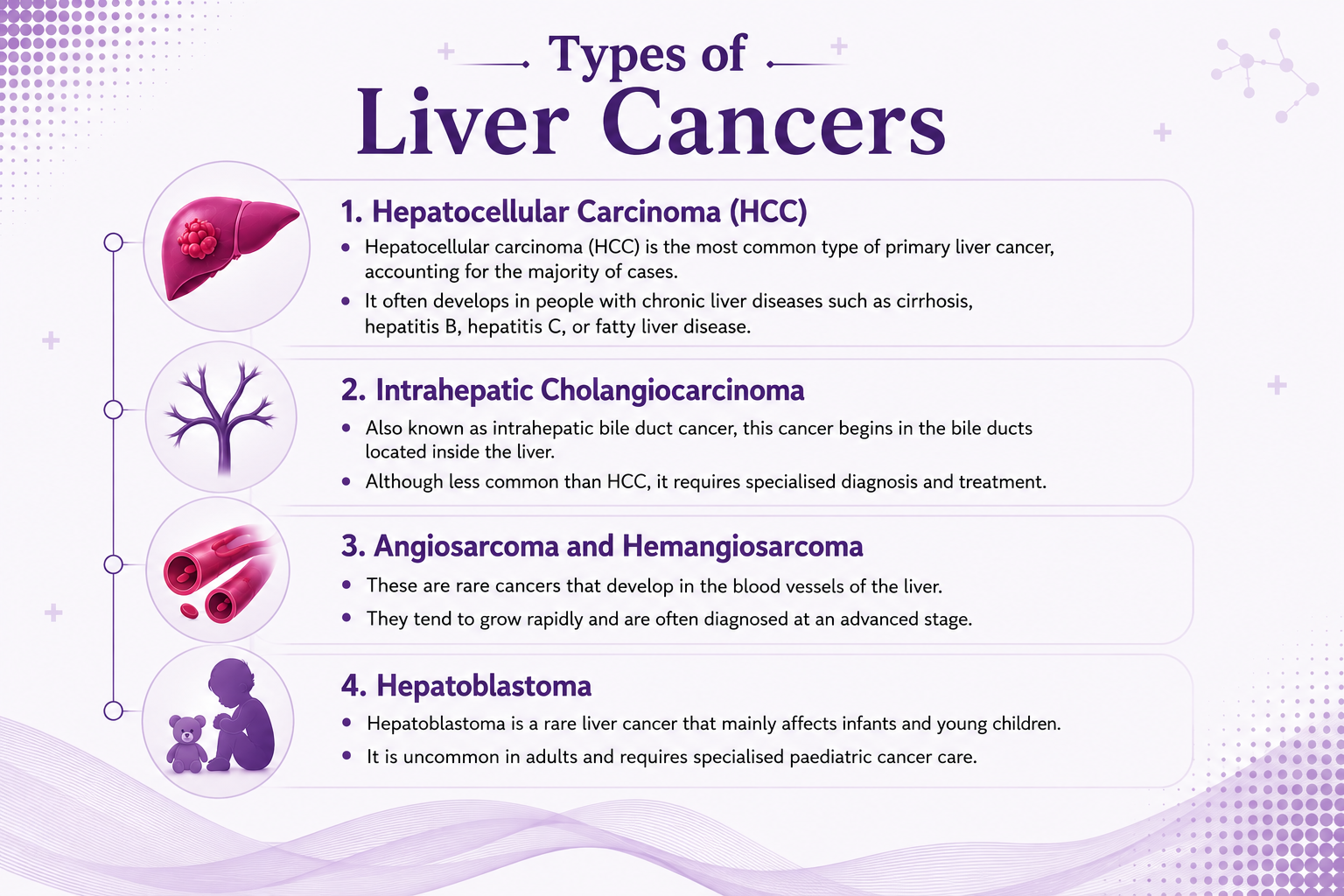
Hepatocellular Carcinoma (HCC)
- Hepatocellular carcinoma (HCC) is the most common type of primary liver cancer, accounting for the majority of cases.
- It often develops in people with chronic liver diseases such as cirrhosis, hepatitis B, hepatitis C, or fatty liver disease.
Intrahepatic Cholangiocarcinoma
- Also known as intrahepatic bile duct cancer, this cancer begins in the bile ducts located inside the liver.
- Although less common than HCC, it requires specialised diagnosis and treatment.
Angiosarcoma and Hemangiosarcoma
- These are rare cancers that develop in the blood vessels of the liver.
- They tend to grow rapidly and are often diagnosed at an advanced stage.
Hepatoblastoma
- Hepatoblastoma is a rare liver cancer that mainly affects infants and young children.
- It is uncommon in adults and requires specialised paediatric cancer care.
Reach Out for Expert Care
What are the Common Liver Cancer Symptoms?
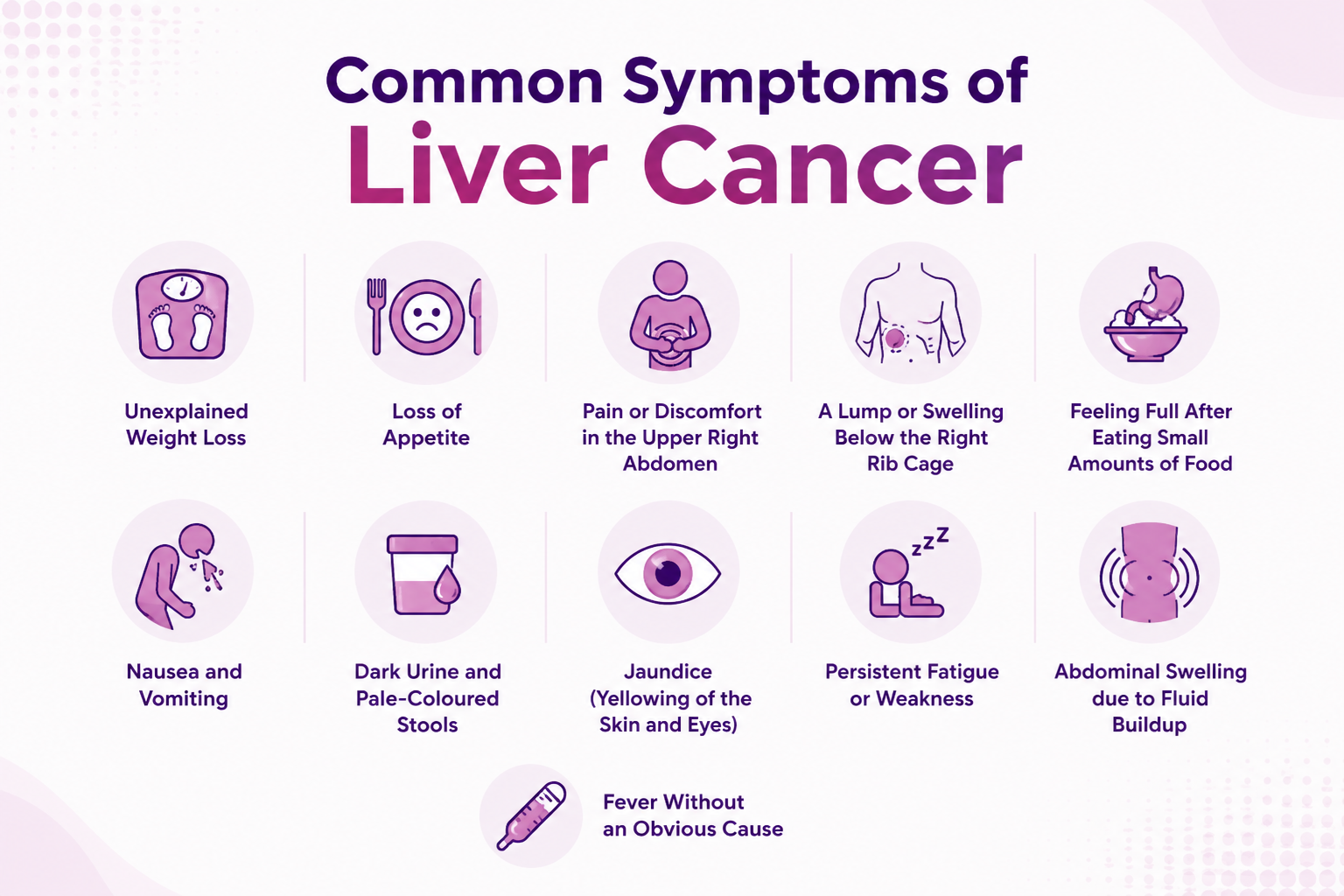
Liver cancer often causes few or no symptoms in its early stages. As the disease progresses, patients may experience one or more of the following:
- Unexplained weight loss
- Loss of appetite
- Pain or discomfort in the upper right abdomen
- A lump or swelling below the right rib cage
- Feeling full after eating small amounts of food
- Persistent fatigue or weakness
- Nausea and vomiting
- Jaundice (yellowing of the skin and eyes)
- Dark urine and pale-coloured stools
- Abdominal swelling due to fluid buildup
- Easy bruising or bleeding
- Fever without an obvious cause
These symptoms are not specific to liver cancer and may also occur due to other liver conditions. If you notice persistent symptoms, consult a liver specialist for a proper evaluation.
Are there Any Causes of Liver Cancer?
Liver cancer happens when liver cells develop changes in their DNA, causing them to grow uncontrollably and form a tumour. While the exact cause isn’t always clear, certain conditions and lifestyle factors can increase your risk of developing liver cancer.
Some of the most common risk factors include:
- Chronic hepatitis B or hepatitis C infection – Long-term viral infections can damage the liver over time.
- Liver cirrhosis – Scarring of the liver caused by ongoing liver damage is one of the biggest risk factors.
- Fatty liver disease (MASLD/previously known as NAFLD) – In some people, fatty liver disease can progress to liver inflammation and cirrhosis.
- Heavy alcohol consumption – Drinking large amounts of alcohol over many years can seriously damage the liver.
- Type 2 diabetes and obesity – These conditions can increase the risk of developing fatty liver disease and liver cancer.
- Exposure to aflatoxins – These harmful toxins can be found in poorly stored grains and nuts.
- Inherited liver conditions – Certain genetic disorders, such as hemochromatosis, can increase the risk.
- Smoking – Tobacco use has also been linked to liver cancer.
Having one or more of these risk factors does not mean you will definitely develop liver cancer. However, if you have chronic liver disease or fall into a high-risk group, regular health check-ups and screening can help detect liver cancer early, when treatment is often more effective.
Liver Cancer Treatment in Delhi: Understanding Your Treatment Options
The right treatment for liver cancer depends on several factors, including the type and stage of cancer, the size and location of the tumour, how well your liver is working, and your overall health. After a thorough evaluation, your liver specialist will recommend a treatment plan that’s best suited to your condition.
Here are the available treatment options for liver cancer in Delhi:
Liver Surgery (Liver Resection)
- If the cancer is confined to one part of the liver and the remaining liver is healthy, surgery may be recommended to remove the tumour.
- This is often the preferred treatment for early-stage liver cancer and offers the best chance of long-term recovery.
Liver Transplant
- A liver transplant may be an option for some patients with early-stage liver cancer who also have severe liver disease or cirrhosis.
- The procedure removes the diseased liver and replaces it with a healthy donor liver, treating both the cancer and the underlying liver condition.
Tumour Ablation
- For small liver tumours or patients who are not suitable for surgery, ablation therapies such as radiofrequency ablation (RFA) or microwave ablation (MWA) can destroy cancer cells using heat.
- These procedures are minimally invasive and usually involve a shorter recovery time.
Embolisation Therapy
- Treatments such as Transarterial Chemoembolisation (TACE) and Transarterial Radioembolisation (TARE) work by cutting off the blood supply to the tumour.
- This helps slow or stop the growth of cancer cells and may be recommended when surgery is not possible.
Radiation Therapy
- Radiation therapy uses high-energy beams to target and destroy cancer cells.
- It may be recommended to shrink tumours, control cancer growth, or relieve symptoms in patients who are not candidates for surgery.
Targeted Therapy
- Targeted therapy uses medicines that block specific proteins or signals that help cancer cells grow.
- It is commonly used for advanced liver cancer and may help slow the progression of the disease.
Immunotherapy
- Immunotherapy helps your body’s immune system recognise and fight cancer cells more effectively.
- Depending on your condition, it may be used on its own or alongside targeted therapy for advanced liver cancer.
Chemotherapy
- Chemotherapy is not commonly used for the most common type of liver cancer (hepatocellular carcinoma), but it may be recommended in certain situations, such as bile duct cancer or when other treatments are not suitable.
Why Choose Dr. Abhideep Chaudhary For Liver Cancer Treatment in India?
Choosing the right liver cancer specialist is essential for accurate diagnosis, personalised treatment, and the best possible outcomes. At the IHPBLT Centre, Dr. Abhideep Chaudhary and his multidisciplinary team provide comprehensive liver cancer care using advanced surgical expertise and evidence-based treatment approaches.
- 20+ years of expertise in HPB surgery and liver transplantation.
- 2,000+ successful liver transplants and extensive experience in complex liver cancer surgeries.
- Personalised treatment plans tailored to your diagnosis and liver health.
- Comprehensive multidisciplinary care by experienced liver specialists and oncologists.
- Advanced treatment options, including liver resection, liver transplantation, ablation, TACE, TARE, and systemic therapies.
- Dedicated support from diagnosis through treatment, recovery, and long-term follow-up.
Frequently Asked Questions (FAQs) about Liver Cancer Treatment in India
1. What is the first sign of liver cancer?
Liver cancer in its early stages does not always have visible signs. With the development of the tumor, however, certain people may feel inexplicable weight loss, loss of appetite, pain in the upper right part of the abdomen, tiredness, or an uncomfortable feeling even after eating a small amount of food.
2. What are the end-stage liver cancer symptoms?
Advanced liver cancer may cause severe abdominal pain, significant weight loss, extreme fatigue, jaundice (yellowing of the skin and eyes), abdominal swelling (ascites), swelling in the legs, confusion due to liver dysfunction, nausea, and loss of appetite. Symptoms vary from person to person depending on the extent of the disease and liver function.
3. Is stage 4 liver cancer curable?
In the final stages of liver cancer, patients may experience persistent pain, severe weakness, loss of appetite, jaundice, fluid buildup in the abdomen, confusion or drowsiness, swelling in the legs, and difficulty carrying out daily activities. Palliative care plays an important role in managing symptoms and improving comfort.
4. What is the liver cancer survival rate?
The survival rate for liver cancer depends on several factors, including the stage at diagnosis, the type of liver cancer, liver function, and the treatment received. Patients diagnosed at an early stage generally have better outcomes, especially if they are eligible for curative treatments such as liver resection or liver transplantation.
5. What is the liver cancer test?
Your doctor may recommend a combination of tests to diagnose liver cancer, including blood tests such as alpha-fetoprotein (AFP), liver function tests, imaging scans like ultrasound, CT scan, or MRI, and, in some cases, a liver biopsy. These tests help confirm the diagnosis and determine the stage of the cancer.
6. Is cirrhosis of the liver cancer?
No. Cirrhosis and liver cancer are different conditions. Cirrhosis is permanent scarring of the liver caused by long-term liver damage. While cirrhosis itself is not cancer, it is one of the strongest risk factors for developing liver cancer. People with cirrhosis should undergo regular screening for early detection.
7. What are the stage 2 liver cancer symptoms?
Some people with stage 2 liver cancer may still have no symptoms. Others may experience abdominal pain, fatigue, loss of appetite, unexplained weight loss, nausea, or a feeling of fullness after eating. Symptoms vary depending on the size and location of the tumour.
8. What is the recommended diet for liver cancer patients?
A balanced, nutrient-rich diet can help support overall health during liver cancer treatment. Patients are generally advised to eat adequate protein, whole grains, fruits, vegetables, and healthy fats while limiting alcohol, processed foods, and excess salt. Because nutritional needs vary, it is best to consult your treating doctor or a clinical dietitian for a personalised diet plan.
9. What is the cost of liver cancer treatment in Delhi?
The liver cancer treatment cost in Delhi will depend on various parameters that include the cancer stage, the kind of treatment needed, such as surgery, transplantation, ablation, immunotherapy, or targeted therapy, the duration of stay at the hospital, and overall well-being. The estimated cost can be determined after a careful analysis is conducted by your liver specialist.
10. How to find the best liver cancer hospital in Delhi?
When choosing a liver cancer hospital in Delhi look for a centre with experienced HPB and liver transplant surgeons, a multidisciplinary team, advanced diagnostic and surgical facilities, comprehensive treatment options, dedicated intensive care support, and a strong track record in managing complex liver diseases and liver cancer.
11. How to find the best liver cancer doctor in Delhi?
Choose a liver cancer specialist in Delhi with extensive experience in hepatobiliary (HPB) surgery and liver transplantation, expertise in treating both primary and secondary liver cancers, and access to a multidisciplinary team. An experienced specialist will provide a personalised treatment plan based on the stage of cancer, liver function, and your overall health while supporting you throughout your treatment journey. Dr. Abhideep Chaudhary is a leading liver cancer specialist in India and is widely regarding for the personalised and advanced diagnosis and treatment of liver cancer patients with high success outcomes.

Medically Reviewed by:
The IHPBLT Medical Editorial Team
 WhatsApp