

Life After Liver Transplant: Diet, Medicines and Follow-Up Schedule
The surgery takes a few hours. The recovery that follows is a long and hopeful journey. Most people who receive a new liver go back to work, family life and travel. What decides how well you do is rarely the operation alone. It is the daily habits that come after: what you eat, which tablets you take on time, and which appointments you never skip. This guide covers all three in plain language.
What Is Life Like After a Liver Transplant?
Life after a liver transplant means returning to normal routines with a few firm habits: lifelong anti-rejection medicines, a food-safe diet and regular check-ups. Outcomes are strong. Recipient survival of about 90% at one year and 80% at five years is now achievable, according to a transatlantic study of long-term outcomes.
- Energy comes back in stages, and most people feel clearly better within a few months.
- Your immune system is deliberately lowered, so infections need more attention than before.
- Long-term risks move from the liver to the heart, kidneys, blood sugar, bones and skin. Long-term deaths after transplant are driven mainly by immunosuppression complications, recurrent disease and other medical conditions, not graft failure.
- Follow-up at your transplant centre is part of the treatment itself.
Think of the transplant as the start of a partnership with your care team. If you are still comparing options such as living donor and deceased donor surgery, our overview of liver transplant explains each route.
How Long Does Recovery Take After a Liver Transplant?
Most people spend about two to three weeks in hospital and then take roughly three to six months to regain everyday strength. Your pace depends on your age, your health before surgery and the type of transplant.
- First weeks at home: short walks, wound care, and no heavy lifting until your surgeon clears you.
- Months 1 to 3: stamina builds steadily. Driving is allowed once your surgeon says so and you are off strong pain medicines.
- Months 3 to 6: many people return to desk work. Physically demanding jobs usually take longer.
- Year 1: your team gradually adjusts medicine doses based on blood tests.
Slow progress in the early weeks is normal, so measure yourself against last week and not against a friend’s recovery.
What Should You Eat After a Liver Transplant?
Eat a balanced, protein-rich, freshly cooked, low-salt diet. Protein rebuilds the muscle lost during liver disease, and careful food handling protects your weakened immune system. Your transplant dietitian will set exact portions for you.
- Protein at every meal: dal, moong, eggs, paneer, curd, well-cooked fish or chicken, and soya.
- Colour on the plate: seasonal vegetables and fruits, washed well and peeled where possible.
- Whole grains: roti, daliya, brown rice and oats for steady energy.
- Less salt: steroids and tacrolimus can raise blood pressure. Hypertension affects 40% to 85% of liver transplant patients.
- Less sugar and fried food: diabetes affects 30% to 40% of recipients, and some develop it for the first time after transplant.
- Safe water: boiled, filtered or sealed bottled water only.
Healthy eating also protects against weight gain, which is one of the most common problems after transplant.
Which Foods and Drinks Should You Avoid After a Liver Transplant?
Avoid alcohol, grapefruit and pomelo (chakotra), raw or undercooked food, unpasteurised dairy, and herbal or Ayurvedic supplements that your team has not approved. These either damage the new liver, interfere with your medicines or raise infection risk.
- Alcohol: no amount is considered safe for a new liver.
- Grapefruit and pomelo: they can raise tacrolimus levels in the blood. Ask your team before eating pomegranate or drinking its juice.
- Raw foods: salads from outside, sprouts, undercooked eggs, meat and seafood.
- Street food: golgappa, chaat and cut fruit from roadside stalls are a particular risk in Delhi.
- Unpasteurised milk and soft cheeses.
- Herbal products: kadha mixes, concentrated turmeric, giloy and “liver tonics” can injure the liver or change drug levels.
When in doubt, ask before you eat or swallow something new.
Which Medicines Do You Take After a Liver Transplant?
Most recipients take immunosuppressant (anti-rejection) medicines for life. Tacrolimus and cyclosporine are the most commonly used. Early on they are often combined with mycophenolate and a short course of steroids. Extra tablets prevent infections and control blood pressure or sugar.
- Take them at the same times daily, and set phone alarms.
- Never skip, stop or double a dose, even when you feel perfectly well. Rejection can be silent at first.
- Get your blood levels checked on the days your team schedules them. Levels guide dose changes.
- Avoid painkillers like ibuprofen and diclofenac. All liver transplant recipients should avoid NSAIDs and other medicines that harm the kidneys. Paracetamol is usually the safer choice, but confirm first.
- Check every new prescription, including antibiotics, supplements and over-the-counter drugs, with your transplant team.
- If you vomit soon after a dose, call the team for advice on whether to repeat it.
Common side effects include hand tremors, higher blood sugar, headaches and kidney strain. Report them early, because doses can often be adjusted. Answers to everyday medicine questions are also collected in our FAQs.
What Is the Follow-Up Schedule After a Liver Transplant?
A common pattern is one to two visits a week in the first month, every two to four weeks until month three, every one to three months through the first year, and every three to six months after that. Your team will adjust this to your health.
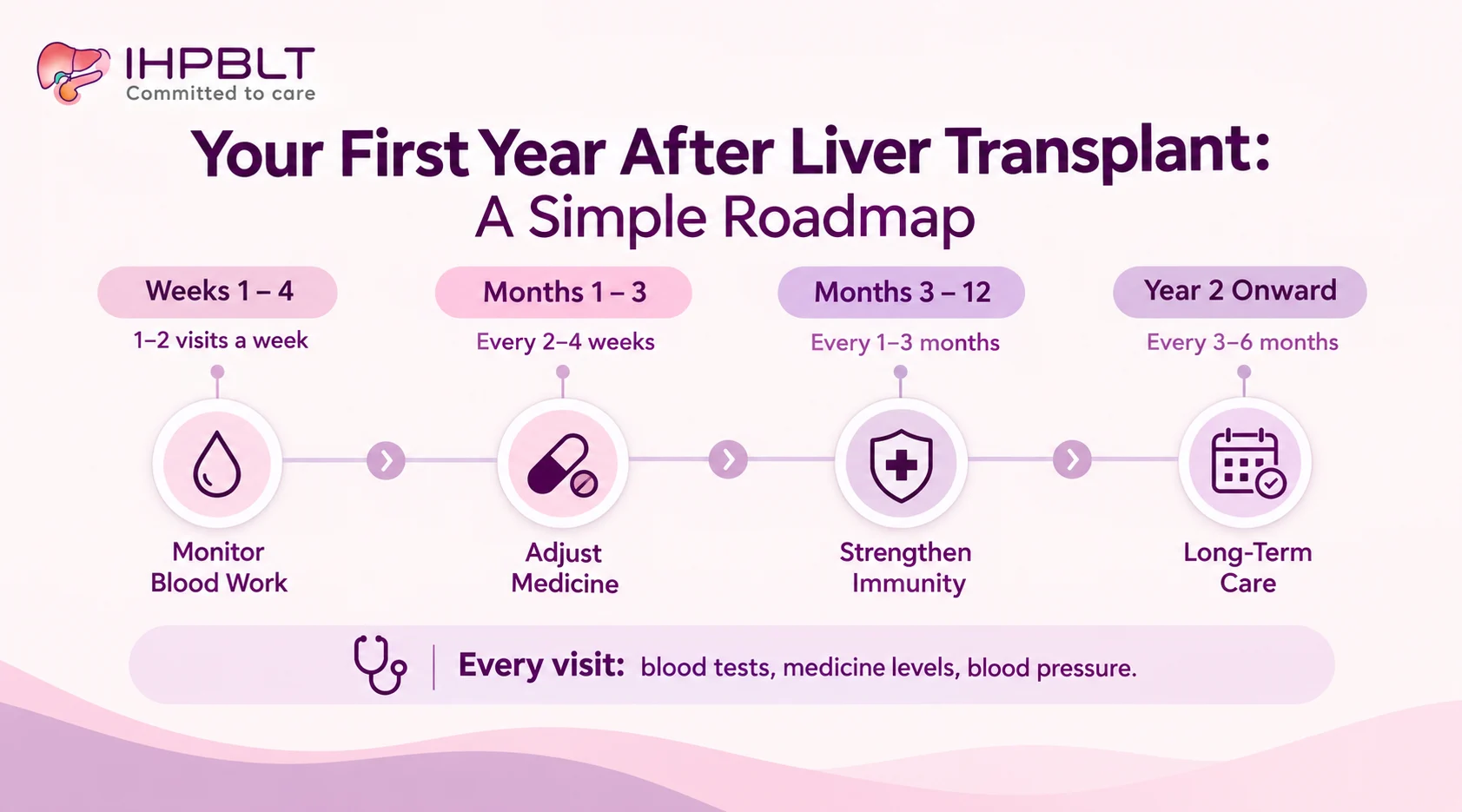
What happens beyond the routine blood tests:
- Every year: blood pressure, blood sugar, cholesterol, weight and kidney checks. The AASLD/AST guideline advises annual screening for hypertension, diabetes, obesity and dyslipidemia, plus a yearly full-body skin exam.
- Your local doctor: a visit to your primary care physician about every six months is reasonable.
- As advised: bone density scans and cancer screening such as colonoscopy, based on your age and history.
Lifelong medicines and tests are an ongoing cost, so it helps to plan ahead. Our liver transplant cost guide explains what to budget for. If you live abroad, our international patients team can help coordinate follow-up with a doctor near you.
Which Warning Signs Need Urgent Attention After a Liver Transplant?
Call your transplant team the same day for fever of 38°C (100.4°F) or higher, yellow eyes or skin, dark urine, pale stools, abdominal pain, a red or leaking wound, repeated vomiting, or sudden swelling or weight gain. These can signal infection or rejection.
- Do not wait for your next appointment.
- Keep the team’s phone number saved and written on paper.
- Carry a card listing your medicines and your surgeon’s contact details.
Early treatment of a problem is usually simple, and late treatment rarely is.
Can You Return to Work, Exercise and Normal Life After a Liver Transplant?
Most recipients return to work, exercise, travel and family life, often within three to six months when recovery goes smoothly. Sun protection, vaccination and weight control become lifelong habits.
- Move daily: begin with walking, then add swimming, cycling or yoga when your team agrees. Avoid contact sports.
- Protect your skin: non-melanoma skin cancer is the most common cancer after liver transplant, and overall cancer risk is about 2.45 times higher than in the general population. Use sunscreen, wear hats and book annual skin checks.
- Stay vaccinated: influenza, pneumococcal and tetanus vaccines are recommended. Ask before taking any live vaccine.
- Plan major life events: discuss pregnancy, long trips and elective surgery with your team first.
- Special situations: if your transplant was for cancer, follow-up scans matter even more. See our page on liver cancer treatment. For children, our pediatric liver transplant programme has its own aftercare plan.
A new liver gives you time. These habits help you make the most of it.
Conclusion: Your Care Does Not End at Discharge
Life after a liver transplant rewards consistency: the right food, the right medicines at the right time, and every follow-up kept. Do these well and the odds are firmly in your favour.
If you or a family member needs transplant evaluation or aftercare guidance, you can consult an experienced liver transplant surgeon in Delhi. Book an appointment or share your reports for a second opinion.
Medical disclaimer: This article is for general education and does not replace personal medical advice. Always follow your own transplant team’s instructions.

 WhatsApp