

Liver Cirrhosis Treatment in Delhi NCR
Liver Cirrhosis is the stage at which long-term liver damage has turned healthy liver tissue into scar tissue. Scar tissue is stiff, fibrous tissue that cannot perform the normal functioning of liver tissue. Scarring cannot be fully reversed, but its progress can often be slowed or stopped when the cause is treated. If the liver is failing, a transplant can replace it. For patients and families searching for Liver Cirrhosis treatment in Delhi NCR, the real question is usually practical: is medicine enough, or is transplant needed, and how soon?
Dr. Abhideep Chaudhary is Chairman & HOD, HPB Surgery & Liver Transplantation at BLK-Max Super Speciality Hospital, New Delhi. He is an internationally trained liver transplant surgeon with more than 20 years of surgical experience and advanced transplant training at the Thomas Starzl Transplantation Institute, UPMC, Pittsburgh.
What Is Liver Cirrhosis?
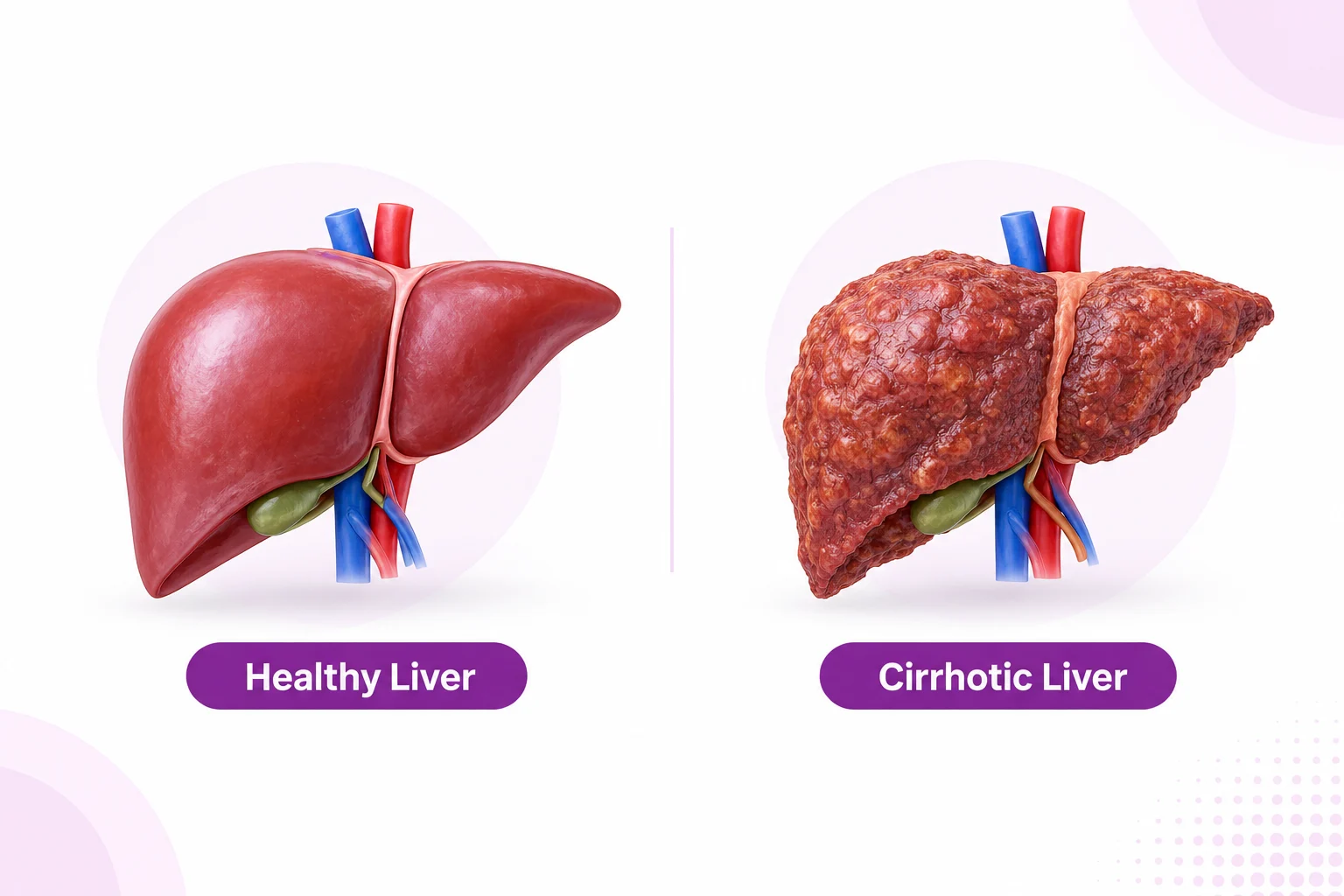
Liver cirrhosis is advanced, permanent scarring of the liver caused by years of ongoing injury or inflammation. A scarred tissue is stiff fibrous tissue.
Each time the liver is damaged, it repairs itself by laying down scar tissue. Over time, this scar tissue replaces healthy cells, makes the liver hard and lumpy, and blocks blood flow through it.
The liver does several jobs at once:
- Filters blood
- Makes blood clotting proteins
- Processes medicines and toxins
- Produces bile for digestion.
As scarring spreads, the liver slowly loses its ability to do its work.
Liver Cirrhosis Stages
Cirrhosis is commonly described clinically as compensated or decompensated cirrhosis. The distinction is important because it helps determine how well the liver is coping and whether complications have developed.
Compensated Cirrhosis
In compensated cirrhosis:
- The liver is scarred but can still perform many of its functions.
- Symptoms may be absent or mild.
- Treatment focuses on controlling the underlying cause.
- Regular monitoring is important to detect complications early.
A patient with compensated cirrhosis does not automatically need a liver transplant.
Decompensated Cirrhosis
Decompensated cirrhosis develops when the liver can no longer adequately compensate for the damage and complications begin to appear.
These may include:
- Ascites, or fluid accumulation in the abdomen
- Jaundice
- Bleeding from oesophageal or gastric varices
- Hepatic encephalopathy, which can cause confusion or drowsiness
Decompensated cirrhosis often requires specialist assessment and may lead to consideration of liver transplantation.
What About Stage 1, Stage 2, Stage 3 and Stage 4 Cirrhosis?
Patients often encounter numbered stages of liver disease online. However, in clinical practice, the distinction between compensated and decompensated cirrhosis, along with measures of liver function and complications, is particularly important when assessing advanced cirrhosis.
The severity of disease is assessed using the patient’s symptoms, complications, blood tests and clinical scoring systems such as the Child-Pugh and MELD scores.
Reach Out for Expert Care
Liver Cirrhosis Causes
The most common cause of liver cirrhosis is uncontrolled liver disease that has persisted for years. Some of the other causes are:
- Chronic hepatitis B and hepatitis C infection
- Alcohol-related liver disease
- Fatty liver disease (MASLD/NAFLD): Increasingly common cause in India, linked to obesity, diabetes and high cholesterol
- Autoimmune liver diseases: Autoimmune hepatitis and primary biliary cholangitis
- Bile duct diseases
- Genetic or metabolic conditions: eg: Wilson disease and hemochromatosis
Identifying the cause is the first step of treatment, because treating the cause is the only way to slow further scarring.
Liver Cirrhosis Symptoms
The common symptoms of liver cirrhosis are persistent tiredness, loss of appetite, weight loss, jaundice and swelling in the legs or abdomen. Early cirrhosis often causes no clear symptoms because the liver keeps working despite the scarring, so many patients are diagnosed only after complications appear.
As more of the liver is replaced by scar tissue, symptoms become more noticeable:
- Tiredness, weakness and loss of appetite
- Weight and muscle loss
- Yellowing of the eyes and skin (jaundice)
- Swelling of the legs or abdomen from fluid
- Easy bruising or bleeding
- Vomiting blood
- Black stools
- Confusion or unusual drowsiness
Symptoms like vomiting blood, black stools or sudden confusion need immediate emergency care.
Liver Cirrhosis Diagnosis
Cirrhosis is diagnosed by combining blood tests, imaging and a measurement of liver stiffness. Further tests then check for complications and judge how severe the disease is.
Blood Tests
They show how well the liver is working.
- Liver function tests (LFTs): Show whether the liver is working normally.
- INR Test: Shows how well the blood clots.
- Platelet count: A low count can point to high pressure in the liver’s blood vessels (portal hypertension).
Scans
They show the liver’s shape, size and condition.
- Ultrasound, CT or MRI: Show the size of the liver, lumpy nodules on surface, fluid in the abdomen and any signs of liver cancer.
- FibroScan: A painless scan that measures liver stiffness. A stiffer liver means more scarring.
Liver Biopsy (Only If Needed)
- A tiny tissue sample is taken when the diagnosis or cause is unclear.
- Tissue is examined for scarring.
Tests for Complications
They show problems cirrhosis may already be causing.
- Upper GI endoscopy: A thin camera checks the food pipe for varices (swollen veins that can bleed), they are to be treated before they burst.
- Ultrasound every six months: Looks for early liver cancer
How Is the Liver Cirrhosis Severity Assessed?
Doctors assess cirrhosis severity by combining symptoms, complications, blood-test results and clinical scoring systems such as Child-Pugh and MELD.
Child-Pugh Score
The Child-Pugh system helps assess how well the liver is functioning in advanced liver disease.
It broadly categorises disease as:
- Class A: Better-preserved liver function
- Class B: Moderately impaired liver function
- Class C: More severe liver dysfunction
MELD Score
The MELD score is used to assess the severity of advanced liver disease and help determine the urgency of liver transplantation.
It uses laboratory measurements including:
- Bilirubin
- INR
- Creatinine
A higher MELD score generally indicates more severe liver disease and greater urgency for transplant consideration.
However, a transplant decision is never based on one number alone. The patient’s overall health, complications, liver function, kidney function, transplant suitability and clinical condition are considered.
Reach Out for Expert Care
Liver Cirrhosis Treatment Options in Delhi NCR
Treatment of cirrhosis focuses on controlling the underlying cause, preventing or treating complications, monitoring liver function and considering liver transplantation when the liver can no longer be adequately supported.
Treatment has three aims:
- Treat the underlying cause
- Manage complications
- Replace the liver if it can no longer be supported
Treating the Underlying Cause
Treating the cause is the only way to slow further scarring.
- Antivirals: Cure Hepatits B or control Hepatits C.
- Quit alcohol completely: Most important step as drinking damages liver
- Control weight, diabetes and cholesterol: Controls fatty liver
Managing Liver Cirrhosis Complications
Most complications of cirrhosis happen because blood cannot flow easily through the scarred liver. It backs up, and pressure builds up in the veins leading to the liver. Each complication is treated separately:
- Ascites (fluid in the abdomen): Less salt, diuretics (water pills), and fluid drainage.
- Variceal bleeding (bleeding from swollen food pipe veins): Medicines (Beta- blocker) to lower pressure; endoscopic banding to seal the veins.
- Hepatic encephalopathy (confusion from toxin buildup): Medicines that reduce toxins in the gut.
- Liver cancer risk: Ultrasound every six months to catch it early.
Liver Transplantation
It is the only treatment that replaces a failing liver. A liver transplant is considered when:
- Cirrhosis is decompensated: Medicines can no longer keep the patient stable.
- Liver cancer has developed within cirrhosis.
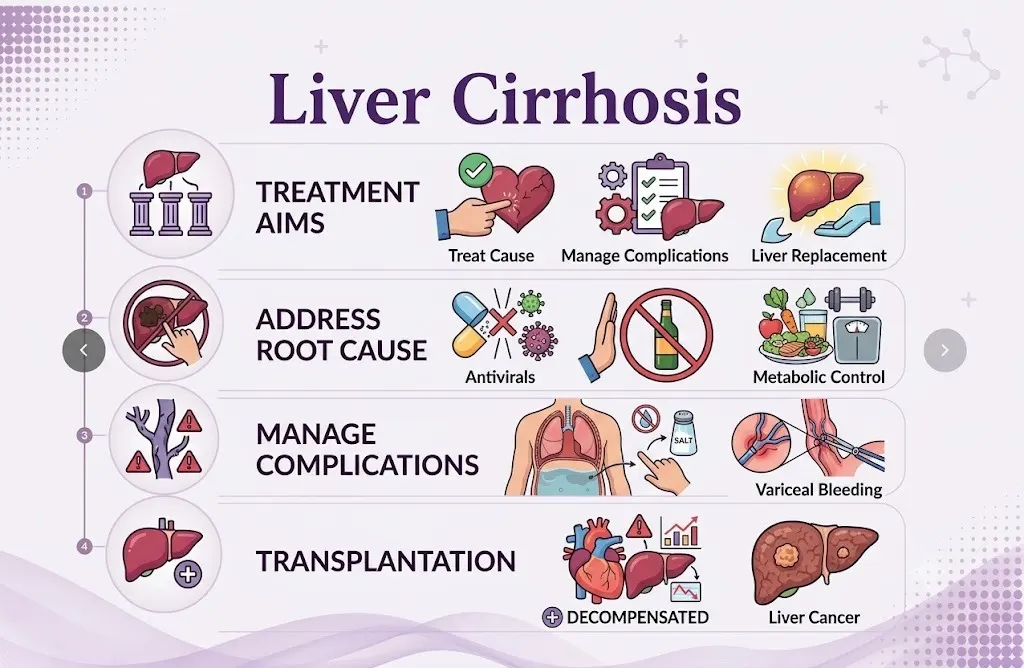
Treatment is chosen by the cause and stage of cirrhosis, and it moves from medicines to transplant only when the liver can no longer be supported.
When Is a Liver Transplant Needed?
A transplant evaluation is considered when cirrhosis keeps causing serious problems despite treatment. Common signs include:
- Repeated fluid buildup in the abdomen
- Repeated bleeding from swollen veins in the food pipe
- Jaundice that does not settle
- Repeated episodes of confusion (hepatic encephalopathy)
- A rising MELD score
Early referral keeps more options open, since a patient must be fit enough for surgery. It does not mean a transplant is needed right away; it lets the team assess timing.
Living Donor vs Deceased Donor Liver Transplant
A liver transplant uses either part of a healthy living person’s liver (living donor) or a liver from a deceased donor).
| Living Donor | Deceased Donor | |
| Source | A healthy person donates part of their liver | A deceased donor gives a whole or split liver |
| Regrowth | Donor’s and recipient’s liver regrow within weeks to months | Recipient’s liver regrows if a split liver is used |
| Timing | Surgery can be planned | Depends on organ availability |
| In India | Accounts for a large share of transplants, as deceased donor organs are limited | Allocated through the registered system |
The right choice depends on donor availability, blood group, the patient’s condition and how urgent the transplant is.
When Should You See a Liver Specialist?
See a liver specialist if you have symptoms or test results suggesting liver disease, especially:
- Jaundice or yellow eyes
- Abdominal or leg swelling
- Abnormal liver function tests
- Known cirrhosis or worsening symptoms
- Unexplained weight loss or severe fatigue
Early evaluation can help identify liver problems and guide timely treatment.
Why Choose Dr. Abhideep Chaudhary for Liver Cirrhosis Treatment in Delhi?
Dr. Abhideep Chaudhary is an internationally trained HPB and Liver Transplant Surgeon with 20+ years of experience in advanced liver disease and transplantation.
- Expertise in liver cirrhosis and liver failure
- 2,000+ liver transplant and HPB surgeries
- Advanced training in multiorgan transplant surgery at UPMC, USA
- Experience in living donor, deceased donor and ABO-incompatible liver transplantation
- Multidisciplinary care for advanced cirrhosis and transplant evaluation
Treatment is planned according to the cause and severity of liver disease, complications, overall health and transplant suitability.
Whether you are looking for the best liver doctor in India, a liver specialist in Delhi, or an expert opinion for a complex liver condition, Dr. Abhideep Chaudhary and team are committed to helping you make informed decisions with confidence.
How to Book a Consultation with Dr. Abhideep Chaudhary?
A consultation helps assess the cause and severity of liver disease, identify complications and determine the most appropriate treatment pathway.
During the consultation, Dr. Abhideep Chaudhary will:
- Review your liver tests, scans and medicines
- Assess the cause and severity of cirrhosis
- Check for complications
- Discuss treatment and transplant options, if needed
Bring your latest reports and current medication list for a more complete assessment.
Frequently Asked Questions
Is liver cirrhosis reversible? expand_more
Established scarring generally cannot be reversed, but progression can often be halted by treating the cause. When the liver fails, transplant replaces it.
Can cirrhosis be treated without surgery? expand_more
Yes. Many patients, particularly with compensated cirrhosis, are managed with medicines, endoscopic procedures and lifestyle changes. Surgery or transplant is considered when complications cannot be controlled.
What should I do during recovery after liver cirrhosis treatment? expand_more
Take prescribed medicines, avoid alcohol, attend regular check-ups, eat well, and follow your doctor’s advice on activity and screening.
How long does it take to recover after a liver transplant? expand_more
Most patients gradually return to routine activities within about 3 months, but recovery varies. Regular follow-ups and lifelong anti-rejection medicines are needed.
Who is the best doctor for liver cirrhosis treatment in Delhi NCR? expand_more
Dr. Abhideep Chaudhary is one of the leading HPB and liver transplant surgeons in Delhi NCR, with 20+ years of experience, 2,000+ liver transplant and HPB surgeries, and advanced multiorgan transplant training at UPMC, USA.

Medically Reviewed by:
The IHPBLT Medical Editorial Team
 WhatsApp