

Whipple Procedure in Delhi
The Whipple procedure is a major operation for tumours and diseases of the pancreas head and nearby digestive organs. A diagnosis that points towards it can feel overwhelming. This guide explains, in simple language, what the Whipple procedure in Delhi involves, who needs it, the risks, and what recovery looks like, so you can ask informed questions.
At the Institute of Hepato-Pancreato-Biliary and Liver Transplantation (IHPBLT) at BLK-Max Super Speciality Hospital, New Delhi, pancreatic surgery is part of a wider liver, bile duct and pancreas programme. It is led by Dr. Abhideep Chaudhary, a transplant and HPB surgeon with over 20 years of experience. The information below reflects how a multidisciplinary HPB team approaches the Whipple procedure, including pancreatic cancer treatment in Delhi.
What Is the Whipple Procedure?
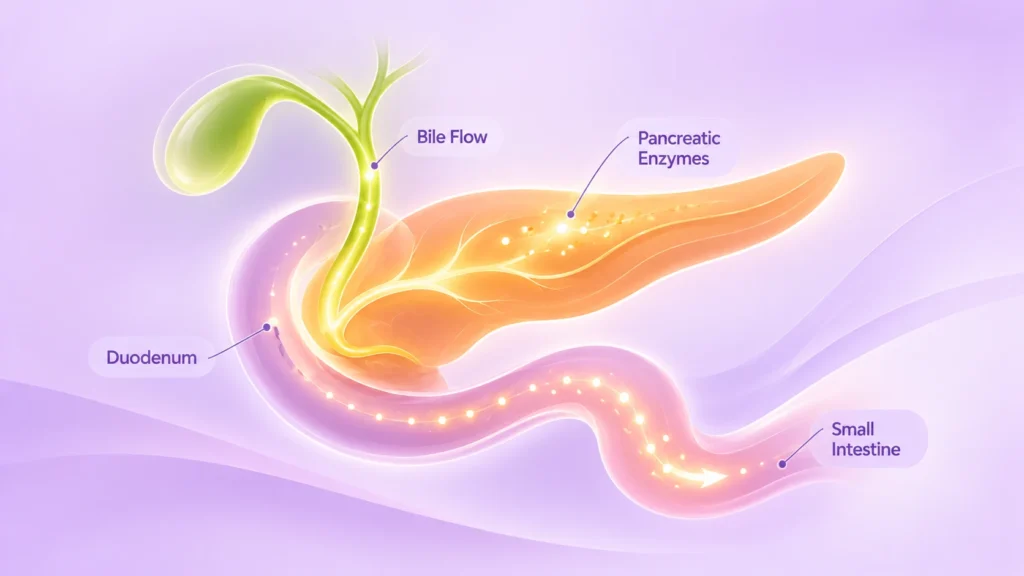
The Whipple procedure, medically called pancreaticoduodenectomy, is a major surgery that removes the head of the pancreas, the duodenum, the gallbladder and part of the bile duct. The surgeon then reconnects the digestive system so food and bile can flow normally.
- It is named after Dr Allen Whipple, who refined it into a one-stage operation in 1940 (StatPearls).
- These organs are removed together because they share a blood supply and sit tightly packed.
- The remaining pancreas, bile duct and stomach are joined to the small intestine.
- It is one of the most complex operations in hepato-pancreato-biliary (HPB) surgery.
Understanding what is removed and rebuilt makes the rest of the treatment journey easier to follow.
When Is Whipple Surgery Needed?
Whipple surgery is mainly advised for tumours in the head of the pancreas. It is also used for cancers of the ampulla, lower bile duct and duodenum, and for selected non-cancerous conditions such as chronic pancreatitis or pancreatic cysts.
- Pancreatic head cancer is the most common reason. You can read more about pancreatic cancer treatment in Delhi.
- Cancers of the ampulla (where bile and pancreatic ducts meet) and the duodenum.
- Cancer of the lower bile duct, which sometimes needs bile duct surgery when the tumour is higher up.
- Neuroendocrine tumours, and cystic growths with a risk of turning cancerous.
- Chronic pancreatitis with a mass in the pancreas head.
- Warning signs include yellow eyes or skin, pale stools, itching, unexplained weight loss and upper abdominal or back pain.
Persistent jaundice or unexplained weight loss deserves a timely check by a specialist.
Reach Out for Expert Care
How Is the Whipple Procedure Performed?
The Whipple surgery has two stages. The surgeon first removes the diseased pancreas head, duodenum, gallbladder and bile duct section, then reconnects the remaining bile duct, pancreas and stomach to the small intestine. It takes several hours under general anaesthesia.
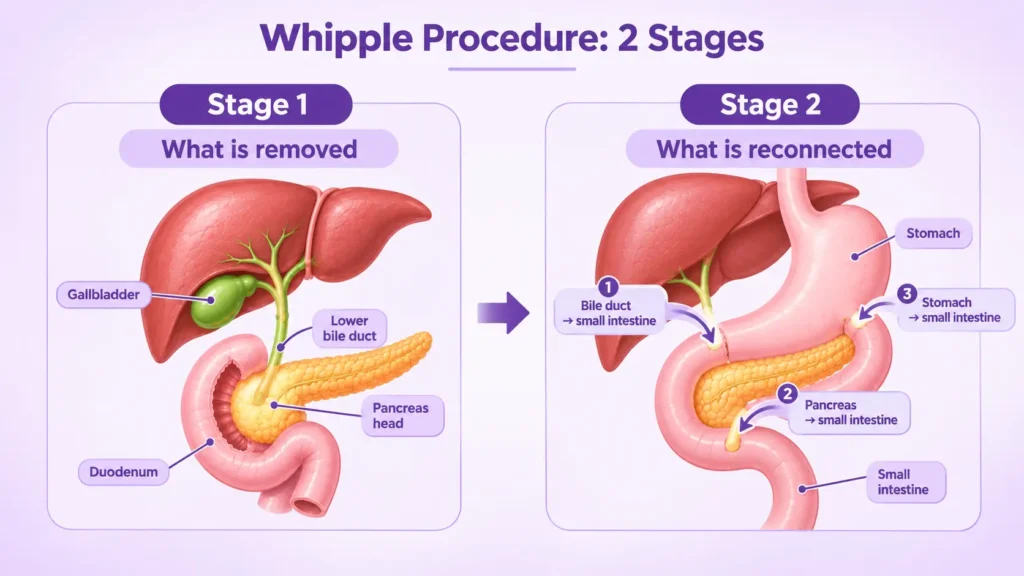
- Stage 1: removal of the affected organs and nearby lymph nodes.
- Stage 2: three reconnections so bile, pancreatic juice and food all reach the intestine.
- A feeding tube or drains may be placed temporarily.
The infographic gives a quick visual of the two stages before you speak to your surgical team.
Open, Laparoscopic, Robotic or Pylorus-Preserving: What Is the Difference?
The classic Whipple removes part of the stomach, while the pylorus-preserving version keeps the stomach outlet. The operation can be done through one large incision (open) or through small cuts using laparoscopic or robotic tools.
- Both stomach-related versions have been compared in published reviews, with broadly similar cancer outcomes.
- Open surgery remains common for complex or large tumours.
- Minimally invasive methods may mean smaller cuts and quicker mobilisation in suitable patients. Centres that offer robotic HPB surgery in Delhi use similar principles.
- The right approach depends on tumour position, scans and your overall health.
Your surgeon chooses the technique based on safety first, not on trend.
Who Is a Suitable Candidate and What Tests Come First?
You are a suitable candidate if the tumour is confined to the area that can be removed and you are fit enough for major surgery. Scans, blood tests and a fitness check decide this before any decision is made.
- CT or MRI scans show whether major blood vessels are involved. Spread to distant organs generally rules out the operation (StatPearls).
- Endoscopic ultrasound and biopsy may confirm the diagnosis.
- Blood tests include liver function and the CA 19-9 marker.
- Heart, lung and nutrition checks help reduce complication risk.
- Some patients get chemotherapy first to shrink the tumour.
Careful selection is what keeps the operation safe and worthwhile.
What Are the Risks and Complications of Whipple Surgery?
Whipple surgery carries real risks, including delayed stomach emptying, pancreatic leaks, bleeding and infection. In high-volume hospitals with experienced teams, the risk of death is reported to be below 3% (StatPearls).
- Delayed gastric emptying: reported in roughly 15-40% of patients in surgical series, usually temporary.
- Pancreatic fistula: a leak from the pancreas join, often managed with drains.
- Bleeding, wound infection and chest infection.
- Later, some people need digestive enzyme capsules or develop diabetes.
Knowing these risks beforehand helps you and your family make a calm, informed decision.
What Does Recovery After Whipple Surgery Look Like?
Most patients stay in hospital for about 7 to 11 days, then take several weeks to regain strength. Diet progresses slowly from liquids to small, frequent meals.
- A 2024 study compared hospital stays of 7 and 11 days between two Whipple techniques (Cureus).
- Enhanced recovery programmes encourage early walking and early feeding.
- At home, expect tiredness, smaller appetite and gradual weight regain.
- Enzyme supplements, a dietitian’s plan and blood sugar checks may be needed.
- Heavy lifting is usually restricted for some weeks, as your surgeon advises.
Recovery is gradual, and steady follow-up visits help catch problems early.
What Is the Survival Outlook After a Whipple Procedure?
Outlook depends on the diagnosis. For pancreatic cancer, surgery offers the only realistic chance of cure, while outcomes for non-cancerous and ampullary conditions are generally better.
- Overall five-year survival for pancreatic cancer is only about 12% across all stages (StatPearls).
- Patients who can have surgery usually do better than those who cannot.
- Chemotherapy before or after surgery is often part of the plan.
- Early detection improves the chances of a resectable tumour.
Your own scans, tumour type and stage give the most meaningful picture, not general figures.
Reach Out for Expert Care
What Affects the Cost of Whipple Surgery in Delhi?
The cost of Whipple surgery in Delhi varies with the hospital category, surgical approach, ICU and room stay, and any complications. An itemised estimate before admission is the most reliable guide.
- Hospital type and room category.
- Open versus minimally invasive technique.
- Length of ICU and ward stay.
- Investigations, medicines and nutrition support.
- Insurance and TPA coverage. See also GI surgery in Delhi for related surgical care.
Asking what is included and excluded avoids surprises later.
The Training Behind Whipple Procedure in Delhi
Dr. Abhideep Chaudhary is a liver transplant and HPB surgeon in Delhi. He trained in General Surgery (MS) and completed a hepatobiliary and multiorgan transplant fellowship at the Thomas Starzl Transplantation Institute, University of Pittsburgh Medical Center. This training in complex upper abdominal surgery matters for the Whipple procedure, which demands precise handling of the pancreas, bile duct and major blood vessels. His approach to pancreatic head tumours focuses on careful staging, multidisciplinary planning before surgery, and a clear recovery plan after it.
His expertise includes:
- Pancreatic head, ampullary and duodenal tumours, including the Whipple procedure.
- Bile duct and gallbladder diseases.
- Liver cancer and complex liver resections.
- Liver transplant, including living donor and paediatric liver transplant.
- Minimally invasive and robotic liver and HPB surgery.
If you are looking for a Whipple surgeon in Delhi NCR, these are the points worth keeping in mind. Look for HPB and transplant-level training, a team that reviews your scans together before deciding on surgery, and strong ICU, nutrition and anaesthesia support for recovery. You can read more about his background on his profile page.
Consultation for Whipple Procedure in Delhi: What to Prepare?
A first consultation works best when you bring your earlier scans and reports, a note of your symptoms and a list of questions. This helps the team judge whether the tumour can be removed, how fit you are for surgery and what the right next step is, often within a single visit.
Before the consultation, keep these ready:
- CT, MRI or PET-CT scans (the actual images or CD, not just the reports).
- Endoscopic ultrasound, ERCP or biopsy reports, and details of any bile duct stent already placed.
- Blood tests: liver function and bilirubin, CA 19-9, blood sugar or HbA1c, haemoglobin and kidney function.
- Reports of any chemotherapy or radiotherapy received so far.
- A list of current medicines, especially blood thinners, diabetes medicines and supplements.
- Your recent weight changes, appetite, jaundice or itching history, and any other medical conditions such as heart or lung disease.
- Questions to ask: whether the tumour is removable, whether chemotherapy is needed before surgery, which Whipple technique is suitable (open, laparoscopic or robotic), what the expected hospital stay is, and what follow-up will look like.
If you are searching for a pancreatic cancer surgeon in Delhi for yourself or a family member, these details help you compare options clearly. Patients and families can discuss the diagnosis, treatment options and follow-up plan during a consultation, at their own pace.
Sources
FAQs
Senior liver specialist with extensive experience in transplant and complex liver care.
Is the Whipple procedure a major surgery? expand_more
Yes. It is a long, complex operation that needs an experienced team and close post-operative care.
Can I live normally after a Whipple procedure? expand_more
Many people do, though they may need enzyme tablets, diet changes and regular follow-up.
Is Whipple surgery available in Delhi NCR? expand_more
Yes. Several multispecialty hospitals in Delhi NCR offer it; check experience and ICU support.
Can I get a second opinion for Whipple surgery if I live outside Delhi or abroad? expand_more
Yes. A second opinion usually starts with your scans, biopsy and blood reports being reviewed by the HPB team, which can be shared online before travelling. This helps you understand whether surgery is suitable and what the next step is. Patients from other cities and countries can read about the international patient services to plan the visit at their own pace.
Where is the pancreatic surgery consultation held, and how do I reach it? expand_more
Consultations are held at BLK-Max Super Speciality Hospital, Pusa Road, Rajendra Place, New Delhi. The hospital is a short walk from Rajendra Place Metro Station and about 5 km from New Delhi Railway Station. OPD runs Monday to Saturday, 9 AM to 5 PM, and consultations at Max Hospital, Dwarka are by appointment only. Details of IHPBLT’s services are on the website.

Medically Reviewed by:
The IHPBLT Medical Editorial Team
 WhatsApp